Table of Contents
A standard bolt is usually the right choice when an existing size, strength class, material and head configuration already meet the application.
It is available, interchangeable and inexpensive.
But the cheapest bolt is not always the cheapest fastening solution.
In OEM manufacturing, the real cost of a fastener can extend far beyond its purchase price. A standard bolt may require extra washers, sleeves or spacers. It may slow automated assembly, create tolerance stack-up, demand additional machining or force engineers to redesign surrounding components.
In those situations, a higher-priced custom bolt can sometimes reduce the total cost of the completed assembly.
The right comparison is therefore not:
Standard bolt price vs custom bolt price
It is:
Total installed cost of the standard solution vs total installed cost of the custom solution
Standardization should still be the starting point. Established references such as ASME B18.2.1 define dimensional requirements for common inch-series bolt and screw configurations, while ISO 898-1 specifies mechanical and physical properties for defined classes of carbon- and alloy-steel bolts, screws and studs.
Customization becomes worth considering when a standard fastener begins creating cost, complexity or risk elsewhere in the product.
When Does a Custom Bolt Make Economic Sense?
A custom bolt deserves evaluation when one or more of the following conditions apply:
- A standard bolt requires additional washers, spacers or sleeves
- Operators must manually align or orient the fastener
- Standard head geometry does not fit the available space
- The bolt must also locate, guide, space or transmit torque
- Multiple standard components create an unfavorable tolerance stack
- Standard material or surface treatment does not match the service environment
- High production volume magnifies small assembly inefficiencies
The purpose of customization is not to make a bolt different.
It is to make the complete manufacturing system simpler, more repeatable or less expensive.
Standard Bolt Price Is Only One Part of the Cost
Consider two fastening concepts.
Standard Hardware Solution
The assembly requires:
- One standard bolt
- One washer
- One spacer
- Manual alignment
- Three stocked part numbers
- Multiple picking operations
Custom Bolt Solution
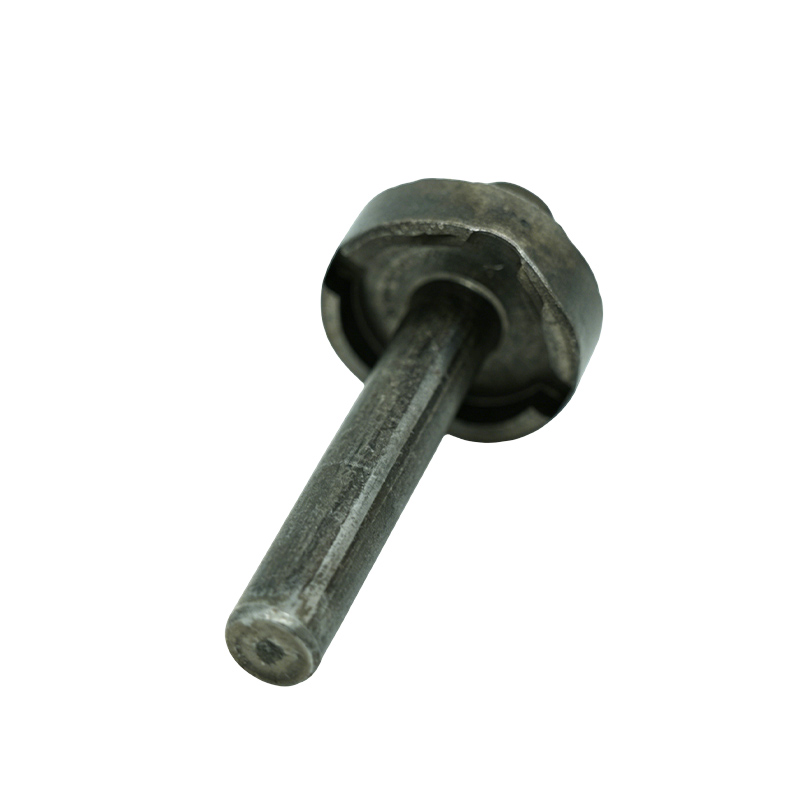
One cold-headed custom bolt incorporates:
- An integral flange
- A controlled shoulder
- A locating feature
- One stocked part number
The custom bolt may cost more per piece, but the assembly may require:
- Fewer purchased components
- Fewer inventory locations
- Less line-side handling
- Fewer assembly operations
- Less opportunity for missing parts
- Simpler automation
- Fewer dimensional interfaces
This is why engineers and purchasing teams should evaluate cost per completed assembly, not only cost per fastener.
Romy’s guide to non-standard fasteners vs standard hardware discusses the same principle from a broader functional perspective, including locating, spacing, guiding, anti-rotation and torque-transfer features.
1. A Standard Bolt Requires Extra Washers, Sleeves or Spacers
One of the strongest cases for a custom bolt appears when several inexpensive components are being used simply to compensate for limitations in the standard fastener.
A typical assembly might contain:
Bolt + washer + spacer + sleeve
A properly engineered custom bolt may be able to combine several of those functions into one component.
For example:
- A formed flange can provide a larger bearing surface
- A controlled shoulder can maintain spacing
- A pilot diameter can assist location
- A stop feature can control insertion depth
The individual custom component becomes more sophisticated, but the assembly becomes simpler.
Why component count matters
Each separate component may create its own:
- Supplier requirement
- Purchase transaction
- Incoming inspection
- Inventory location
- Material-handling step
- Line-side storage position
- Picking operation
- Assembly operation
- Replenishment requirement
There is also another failure opportunity each time another component is added.
A washer may cost only a few cents, but a missing washer can create a much more expensive problem if it affects clamp condition, spacing or alignment.
When integration is worth studying
Parts consolidation is particularly attractive when:
- Production is repetitive
- Several small components are always installed together
- Assembly is automated
- Missing-component errors occur
- Inventory reduction is valuable
Romy’s Custom Cold Heading Solutions include drawing-based sleeves, bushings, special-shaped shafts, polygonal parts, long-rod components and other cold-headed geometries developed around specific application requirements.
The engineering question should be:
Can several simple hardware functions be integrated into one manufacturable component without creating excessive tooling complexity?
2. Manual Alignment or Orientation Is Slowing Assembly
A standard bolt is designed primarily to fasten.
A production line may require the same component to do more.
It may need to:
- Find a hole consistently
- Align two components
- Enter a fixture correctly
- Maintain orientation
- Prevent rotation
- Feed through automated equipment
- Stop at a defined depth
If an operator repeatedly has to reposition the fastener before installation, the bolt itself may be inexpensive while the assembly process is not.
Custom geometry can support assembly
Depending on the application, useful features may include:
- Pilot points
- Reduced lead diameters
- Controlled shoulders
- Flats
- Polygonal sections
- Anti-rotation features
- Integrated flanges
- Special head profiles
These features make the bolt part of the assembly strategy rather than merely the final joining element.
This matters even more in automated lines
Human operators can compensate for small variations.
Robots and feeders prefer repeatability.
A custom bolt that reduces:
- Feeder jams
- Orientation errors
- Robot correction
- Manual intervention
- Misassembly
- Cycle time
may create much greater value than the difference in piece price.
When developing this type of part, engineers should evaluate geometry before tooling. Romy’s 7 Design Rules for Reliable Cold Heading Parts explains how functional context, material flow, radii, tolerances and secondary processes affect cold-heading feasibility.
A useful question is:
Can the fastener make the correct assembly easier and the incorrect assembly harder?
3. Standard Bolt Head Geometry Does Not Fit the Available Space
Standard bolt dimensions make product design easier when sufficient installation space is available.
Problems arise when the available envelope cannot accommodate:
- Standard head diameter
- Head height
- Wrench access
- Radial tool clearance
- Installation depth
- Driver access
Engineering may then begin modifying expensive surrounding components simply to accommodate a low-cost standard fastener.
That is not always the most economical solution.
Customizing the fastener may be simpler than redesigning the assembly
Depending on loading and installation requirements, a custom bolt may use:
- Reduced head diameter
- Modified head height
- Special flange geometry
- Internal drive
- External drive
- Two-flat geometry
- Polygonal geometry
- Application-specific recesses
The purpose is not cosmetic differentiation.
The purpose is to fit the fastener into the actual product architecture.
Standards such as ASME B18.2.1 remain useful reference points because they define established dimensional configurations.
If one of those configurations works, there is usually little reason to replace it.
Customization becomes logical when the standard envelope forces larger compromises elsewhere.
Ask:
Are we redesigning a high-value component only because a standard bolt does not fit?
4. The Bolt Must Also Locate, Guide or Transmit Torque
Many engineered assemblies require one component to perform several functions.
The bolt may need to:
- Fasten
- Locate
- Maintain spacing
- Act as a pivot
- Guide movement
- Prevent rotation
- Transmit torque
- Control axial position
A conventional threaded fastener may not perform all of these functions efficiently.
A custom shoulder bolt illustrates the difference
Imagine an assembly requiring:
- M8 thread
- 10 mm locating diameter
- Controlled shoulder length
- Integral flange
- Anti-rotation flats
A standard M8 bolt may require additional components such as:
- Sleeve
- Spacer
- Washer
- Locating feature
A custom bolt can potentially combine these functions in one part.
The thread should not control every function
One common design mistake is using the threaded section both for fastening and precision location.
Threads are generally not ideal surfaces for:
- Bearing contact
- Controlled rotation
- Accurate location
- Smooth sliding
A custom component can retain a recognized thread while adding a dedicated unthreaded locating or bearing diameter.
This is an important principle:
Customize only the features that need to be custom.
A bolt may retain:
- Standard thread
- Defined material
- Recognized mechanical-property requirements
- Existing coating specification
while customizing:
- Head
- Shoulder
- Flange
- Length
- Pilot
- Anti-rotation profile
This approach preserves useful standardization without sacrificing application-specific functionality.
5. Multiple Standard Parts Create a Tolerance Stack-Up Problem
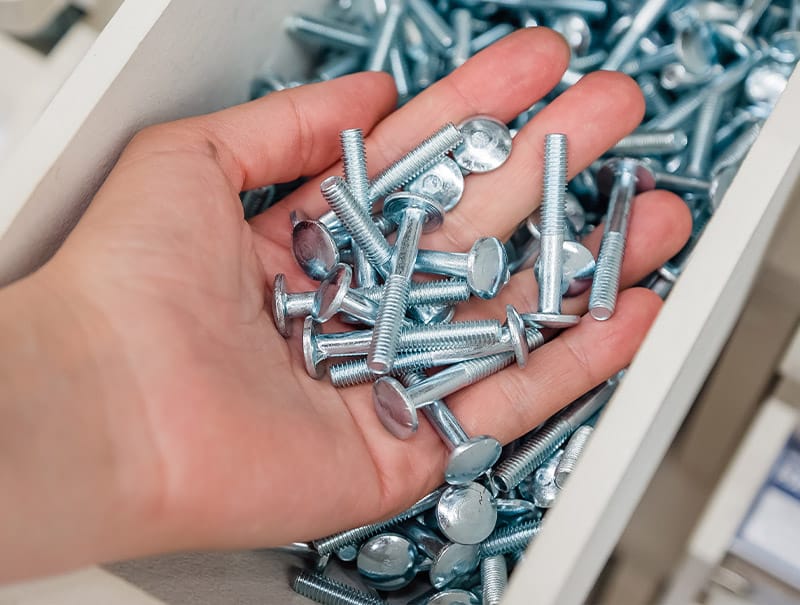
A multi-part assembly introduces multiple dimensional variations.
For example:
Bolt + washer + spacer + bracket + sleeve
Each component has its own tolerance.
When assembled, those tolerances accumulate.
The final variation may affect:
- Axial location
- Clamp condition
- Alignment
- Clearance
- Bearing position
- Operating travel
One possible response is to tighten every individual component tolerance.
That can quickly increase manufacturing cost.
Reducing the number of interfaces can be more effective
Consider:
Multi-part solution
Bolt length tolerance
- washer thickness tolerance
- spacer tolerance
- bracket tolerance
Compared with:
Integrated solution
Controlled custom-bolt shoulder
- bracket tolerance
The custom component itself may require more precise control, but the total assembly may become easier to manage.
Precision should be concentrated on functional dimensions
Not every custom bolt dimension needs an extremely tight tolerance.
Engineering should distinguish between:
- Critical-to-fit dimensions
- Critical-to-function dimensions
- Process-sensitive dimensions
- Non-critical dimensions
The manufacturer can then determine whether each feature should be:
- Cold formed
- Thread rolled
- Machined
- Ground
- Functionally gauged
Tool design directly affects this capability. Romy’s article Cold Heading Die Design: What Controls Tool Life and Part Accuracy? explains how tooling geometry, alignment, wear and material flow influence dimensional stability.
Instead of asking:
How tightly can every dimension be held?
ask:
Which dimensions actually control the function of the assembly?
6. Standard Material or Surface Treatment Does Not Match the Application
A standard bolt can fit dimensionally and still be the wrong fastener.
The application may have specific requirements for:
- Strength
- Ductility
- Fatigue
- Corrosion resistance
- Temperature
- Wear
- Electrical behavior
- Magnetic properties
- Friction behavior
In these situations, selecting a fastener only because it fits the hole can create much larger lifecycle costs later.
Mechanical properties should still be controlled
Custom geometry should never mean undefined performance.
For metric carbon- and alloy-steel bolts, screws and studs, ISO 898-1 provides recognized mechanical and physical property requirements for specified property classes.
A custom fastener can therefore combine application-specific geometry with controlled requirements for:
- Material
- Strength
- Hardness
- Heat treatment
- Thread
- Inspection
Service environment should drive material and coating selection
Fasteners used in different environments may face completely different risks.
Examples include:
- Automotive underbody exposure
- Water systems
- Outdoor equipment
- Electrical products
- Construction machinery
- High-cycle mechanisms
ASTM International Committee F16 on Fasteners develops specifications, test methods and related standards covering areas including steel fasteners, coatings, nonferrous fasteners and fastener quality assurance.
These types of standards help engineers define measurable performance requirements instead of relying on vague descriptions such as “high-strength” or “corrosion-resistant.”
The expensive part is usually the failure
If an inappropriate fastener causes:
- Corrosion
- Loosening
- Premature wear
- Loss of clamp
- Maintenance difficulty
- Field replacement
- Product recall
the original difference in fastener purchase price becomes relatively unimportant.
The right question is:
What conditions will this fastener experience throughout its service life?
7. High Production Volume Makes Small Assembly Inefficiencies Expensive
Custom tooling creates an upfront investment.
For very small quantities, that investment may not make sense.
If the project needs only:
- A few dozen pieces
- A small development batch
- Parts for a frequently changing prototype
CNC machining or modification of standard hardware may be more economical.
But high-volume production changes the calculation.
Small savings become large when repeated often
Suppose a custom bolt saves only 3 seconds of assembly time.
At 1,000 assemblies:
3,000 seconds saved
At 100,000 assemblies:
300,000 seconds saved
At 1,000,000 assemblies:
3,000,000 seconds saved
And assembly time is only one variable.
The customized part may also reduce:
- Component handling
- Inventory SKUs
- Replenishment activity
- Misassembly risk
- Feeder interruptions
- Inspection points
Tooling should be evaluated across program life
For suitable geometry, cold heading can produce repeatable near-net-shape components efficiently in medium- and high-volume programs.
The correct comparison is therefore:
Tooling investment + recurring part cost + assembly cost + lifetime volume
not:
Tooling investment alone
Romy’s Custom Cold-Headed Fasteners: A Practical Guide for Buyers explains how buyers can evaluate geometry, volume, materials, tooling and quality requirements before choosing a manufacturing route.
Standard vs Custom Bolt: A Practical Cost Comparison
Consider an OEM product manufactured 500,000 times per year.
| Cost Factor | Standard Hardware | Custom Bolt |
|---|---|---|
| Bolt purchase price | Usually lower | Usually higher initially |
| Washer | May be required | May be integrated |
| Spacer | May be required | Shoulder may replace it |
| Inventory SKUs | More | Fewer |
| Picking steps | More | Fewer |
| Manual alignment | May be required | Can potentially be reduced |
| Tolerance interfaces | More | Potentially fewer |
| Dedicated tooling | Usually not required | Usually required |
| Automation potential | Depends on standard geometry | Can be designed around assembly |
| High-volume economics | Depends on total process | Can become attractive |
The important point is not that the custom bolt always wins.
It does not.
The point is that the correct cost model must include the whole assembly.
When You Should Keep the Standard Bolt
A professional custom fastener manufacturer should also be able to tell you when customization is unnecessary.
Standard hardware is usually the better choice when:
- Existing standard geometry already works
- Production volume is very low
- Product design is changing frequently
- Additional custom features create no measurable benefit
- Universal field replacement is important
- Multiple interchangeable global suppliers are required
- Tooling cannot be economically justified
- The fastener is not causing an actual engineering or assembly problem
Customization should solve a defined problem.
If there is no problem, standardization usually wins.
Custom Does Not Mean Every Feature Must Be Non-Standard
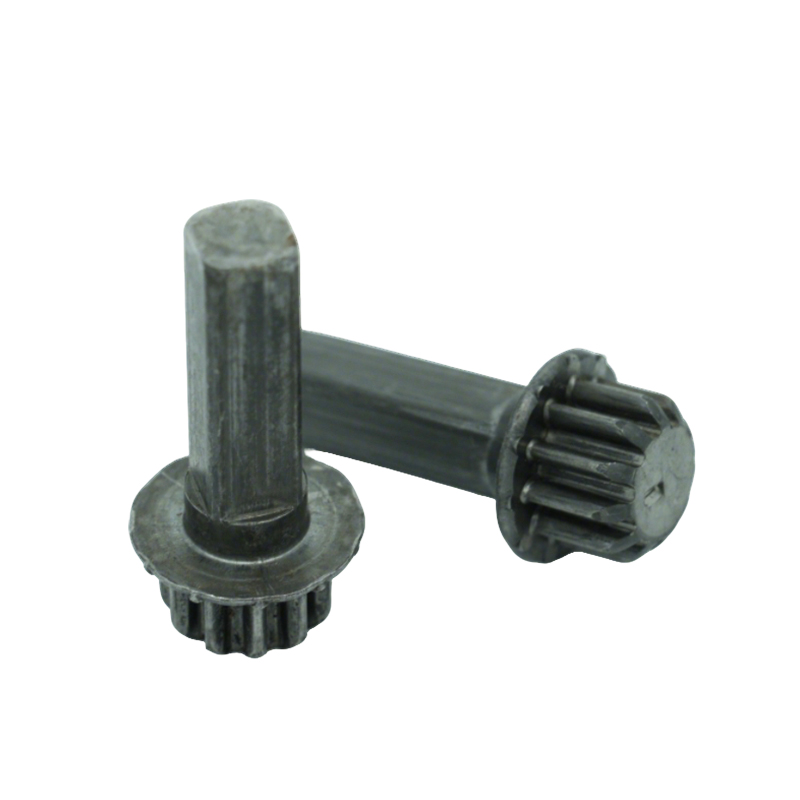
A useful custom fastener strategy often combines standardized and customized characteristics.
For example, a part might retain:
- Standard metric thread
- Standard material designation
- Defined mechanical properties
- Recognized coating specification
while changing:
- Head geometry
- Flange diameter
- Shoulder
- Pilot
- Overall length
- Anti-rotation feature
This can preserve the benefits of standards while adapting the component to a specific product.
For example, mechanical-property requirements may still be aligned with ISO 898-1, even though the head or shoulder geometry differs from catalog hardware.
This usually creates a more practical design than making every characteristic proprietary without reason.
8 Questions to Ask Before Designing a Custom Bolt
1. What problem are we actually trying to solve?
Define the problem precisely.
Examples:
- Too many assembly components
- Slow installation
- Limited head clearance
- Rotation during assembly
- Poor alignment
- Excessive tolerance stack
- Repeated field failure
2. How many components could be eliminated?
The greater the parts-consolidation opportunity, the stronger the potential business case.
3. How much assembly time could be removed?
Measure the current process if possible.
A few seconds can matter at large annual volumes.
4. Which dimensions are truly critical?
Do not apply unnecessary precision to every feature.
5. Which features can be cold formed?
A DFM review can identify which geometry should be formed directly and which features are better produced through secondary machining.
Romy’s cold heading DFM design guide covers material flow, radii, holes, walls, tolerances and secondary operations that can affect production feasibility.
6. What is the annual and lifetime volume?
A part required in quantities of 2,000 and a part required in quantities of 2,000,000 may need completely different manufacturing strategies.
7. Which standards should remain applicable?
Clearly define:
- Thread standard
- Mechanical properties
- Material
- Coating
- Inspection
- Testing
Relevant references may include ISO 898-1, ASME B18.2.1 and applicable ASTM fastener standards.
8. What happens if the program volume changes?
Consider:
- Higher future demand
- Spare tooling
- Additional tooling sets
- Tool ownership
- Engineering revisions
- Supply continuity
Tooling should support the expected life of the program, not just the first order.
What Information Should Be Included in a Custom Bolt RFQ?
A useful RFQ should contain enough information for the manufacturer to understand both the part and the application.
Geometry
Include where applicable:
- Overall length
- Head diameter
- Head height
- Flange diameter
- Shoulder diameter
- Shoulder length
- Pilot geometry
- Drive feature
- Thread size and pitch
- Thread length
- Functional flats
- Special profiles
Material and Performance
Define:
- Material grade
- Strength requirement
- Hardness
- Heat treatment
- Surface finish
- Corrosion requirement
- Applicable standards
Functional Dimensions
Identify dimensions controlling:
- Fit
- Alignment
- Bearing contact
- Rotation
- Torque transfer
- Assembly depth
- Clamp condition
Volume Information
Provide:
- Prototype quantity
- Typical batch quantity
- Annual demand
- Expected program life
- Potential peak demand
Quality Requirements
Include where required:
- Dimensional reports
- Material certificates
- Traceability
- PPAP
- Critical characteristics
- Special testing
This information helps the manufacturer determine whether the most practical route is:
Cold heading
Cold heading + secondary machining
or another manufacturing process.
How a Custom Bolt Manufacturer Should Review the Drawing
A qualified custom bolt manufacturer should not simply reproduce the CAD geometry without discussion.
The engineering review should evaluate:
- Material flow
- Head-to-shank relationship
- Extrusion requirements
- Number of forming stations
- Tool accessibility
- Part ejection
- Thread-forming method
- Secondary machining
- Heat treatment
- Surface treatment
- Critical tolerances
- Inspection methods
- Tool wear
- Annual volume
If a feature appears unnecessarily expensive or unstable, the manufacturer should be able to explain why.
The next question becomes:
Can the geometry or manufacturing route be changed without affecting the function?
That is where DFM creates value.
Romy’s Custom Cold Heading Solutions cover drawing-based development from requirement analysis and tooling through sampling and mass production for non-standard cold-headed components.
Quick Decision Matrix: Standard Bolt or Custom Bolt?
| Application Condition | Standard Bolt | Evaluate Custom Bolt |
| Existing standard geometry fits | ✓ | |
| Very low volume | ✓ | |
| Design changes frequently | ✓ | |
| Universal replacement is important | ✓ | |
| Several washers/spacers are required | ✓ | |
| Precise locating shoulder is required | ✓ | |
| Anti-rotation geometry is required | ✓ | |
| Standard head does not fit | ✓ | |
| Automated assembly is difficult | ✓ | |
| Several parts could be integrated | ✓ | |
| High lifetime volume | Depends | ✓ |
| Standard material cannot meet environment | Depends | ✓ |
This matrix is only a first filter.
The final decision should consider:
- Tooling
- Unit cost
- Assembly labor
- Quality risk
- Program volume
- Supply requirements
Frequently Asked Questions
What is a custom bolt?
A custom bolt is a threaded fastener with dimensions, geometry, material or functional features developed for a specific application rather than being limited to a standard catalog configuration.
Only the necessary features need to be customized. The thread, material or mechanical-property requirements may remain standardized.
Are custom bolts always more expensive than standard bolts?
The individual piece price is often higher because custom bolts may require engineering and dedicated tooling.
However, the total installed cost can be lower when the custom part eliminates other components, reduces assembly time or prevents recurring manufacturing problems.
When should I use a custom bolt instead of a standard bolt?
Custom bolts are worth considering when standard hardware requires extra washers or spacers, cannot fit available space, causes alignment problems, creates an unfavorable tolerance stack or cannot provide the required locating or anti-rotation function.
Can a custom bolt still use a standard thread?
Yes.
A custom bolt can use a standard metric or inch thread while incorporating a custom head, shoulder, flange, pilot or overall length.
Can custom bolts be cold headed?
Many can.
The feasibility depends on material, geometry, forming severity, tolerances and production volume. Complex parts may combine cold heading with thread rolling, CNC machining, grinding, heat treatment or coating.
What production volume makes custom cold-headed bolts worthwhile?
There is no universal threshold.
The break-even point depends on:
- Tooling investment
- Unit production cost
- Secondary machining
- Assembly savings
- Lifetime demand
Annual and lifetime volume should therefore be provided during the RFQ stage.
Can a custom bolt replace a washer or spacer?
In some designs, yes.
An integral flange may replace a separate washer function, while a controlled shoulder may provide spacing or location.
The final design must still be evaluated for loading, bearing pressure, joint function and manufacturability.
Why do custom bolt manufacturers ask about the application?
Application information helps the manufacturer understand which dimensions and features are truly functional.
This can reveal opportunities to simplify geometry, relax non-critical tolerances or eliminate unnecessary machining without reducing performance.
What should I send for a custom bolt quotation?
Ideally provide:
- 2D drawing
- 3D model if available
- Material
- Thread specification
- Critical tolerances
- Heat treatment
- Surface finish
- Annual volume
- Order quantity
- Quality requirements
- Application information
The Lowest-Priced Bolt Is Not Always the Lowest-Cost Solution
Standard bolts remain the best solution for a large percentage of fastening applications.
They offer established dimensions, broad availability and competitive pricing.
Customization only makes sense when it solves a measurable problem.
But when standard hardware forces an assembly to rely on:
- Extra components
- Additional machining
- Manual alignment
- More inventory
- Excessive tolerance stack
- Slower automation
- Repeated quality corrections
the calculation changes.
A successful custom bolt is not valuable because it is unusual.
It is valuable because it makes the complete assembly simpler, more repeatable or more economical.
If your current design uses a bolt together with multiple washers, sleeves, spacers or locating features, Romy’s engineering team can review whether those functions can be integrated into a more efficient cold-headed component.
Explore Romy Custom Cold Heading Solutions or send your drawing, material requirements and expected annual volume for a manufacturability review.