
Table of Contents
Key takeaways
- Cold heading manufacturing is generally better suited to repeatable, medium- and high-volume production of parts that can be formed progressively from wire.
- CNC machining provides greater flexibility for prototypes, low-volume orders, complex cavities, sharp internal features, and frequent design changes.
- Production volume alone should not determine the process. Geometry, material behavior, tolerances, secondary operations, tooling investment, inspection requirements, and lifecycle demand must also be evaluated.
- Cold heading can reduce raw-material loss because the metal is displaced rather than extensively removed.
- CNC machining may avoid dedicated forming-tool investment, but its cycle time and material-removal cost continue with every produced part.
- Some of the most practical components use a hybrid process: cold heading creates the main shape, while machining finishes only the critical features.
- Buyers should request a total-cost comparison instead of comparing only tooling cost or unit price.
- An experienced supplier should review the drawing, application, annual volume, material, tolerances, and quality requirements before recommending a process.
Introduction
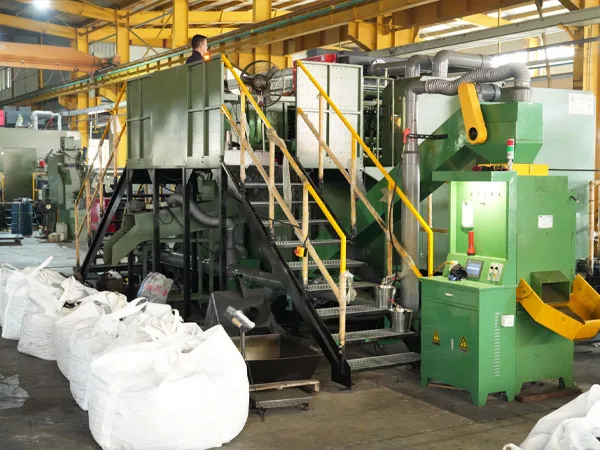
Choosing between cold heading manufacturing and CNC machining is not simply a choice between a “fast process” and a “precise process.” Both methods can produce accurate and reliable metal parts, but they create value in different ways.
Cold heading forms metal by applying compressive force to wire or a prepared blank, usually through several progressive die stations. CNC machining starts with bar, billet, tube, forging, or another workpiece and removes material with digitally controlled cutting tools.
For an OEM engineer or sourcing manager, the correct question is not:
“Which manufacturing method is better?”
The more useful question is:
“Which manufacturing route gives this particular part the best balance of function, quality, production stability, lead time, and total cost?”
This guide compares cold heading manufacturing and CNC machining from the perspective of real purchasing and engineering decisions. It also explains when a hybrid process may provide a better answer than selecting only one method.
What Is Cold Heading Manufacturing?
Cold heading manufacturing is a cold-forming process that reshapes metal without first heating it to conventional forging temperatures. A measured section of wire is transferred through one or more forming stations, where punches and dies progressively create the required head, shank, flange, cavity, shoulder, spline, sleeve, or other geometry.
ASM International describes cold heading as a high-speed process in which a blank can move progressively through a multi-station machine. Process design must account for deformation ratios, material flow, tooling, and the sequence of forming operations.
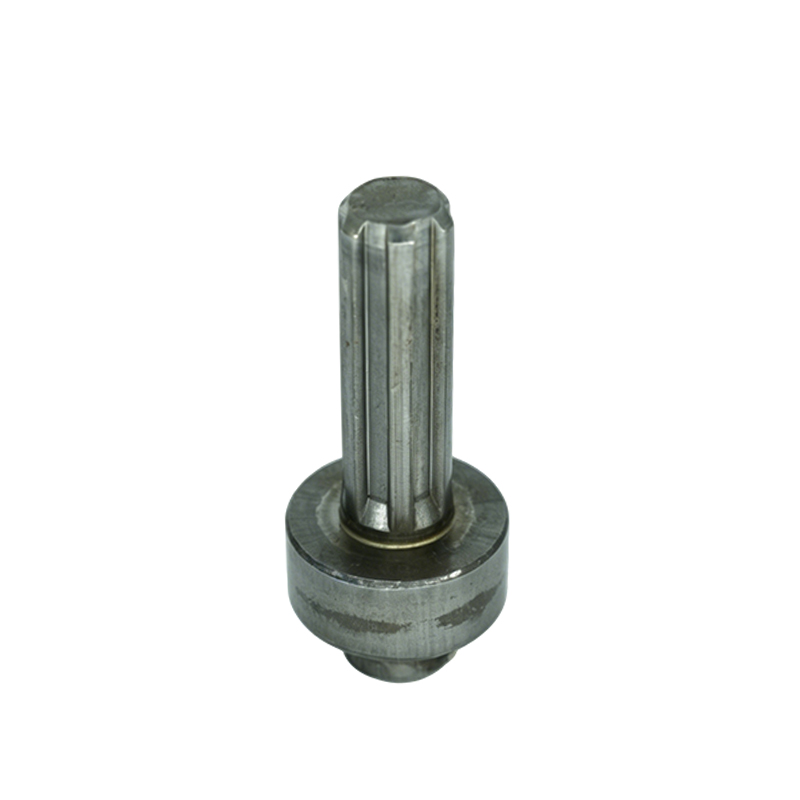
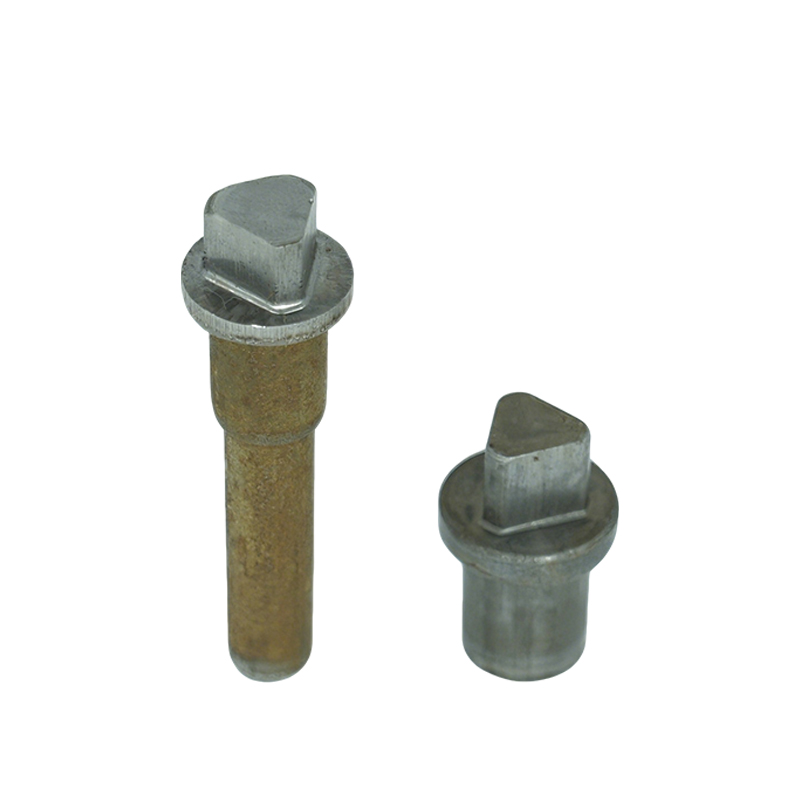
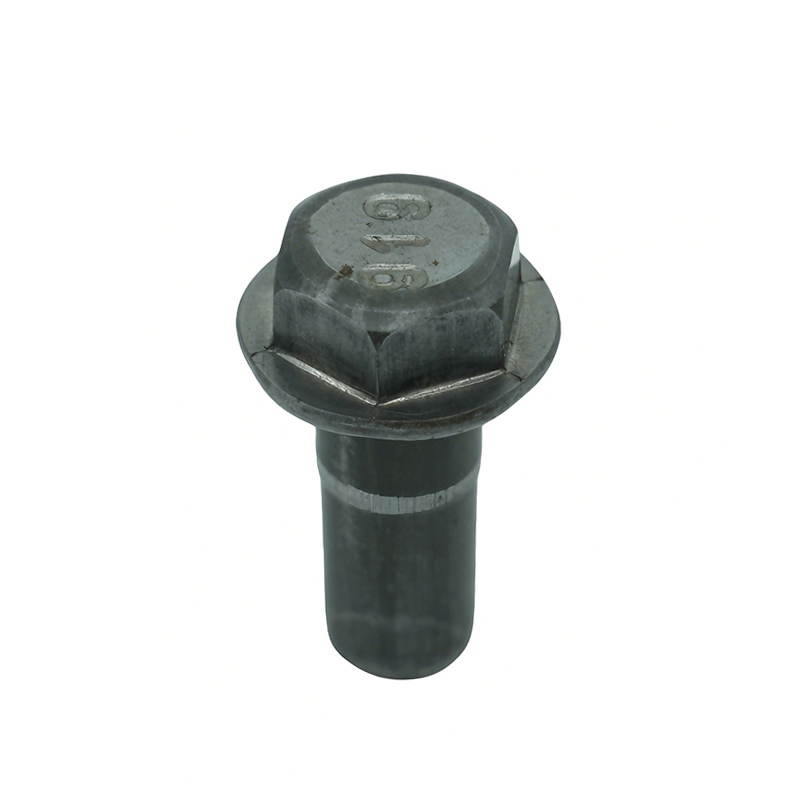
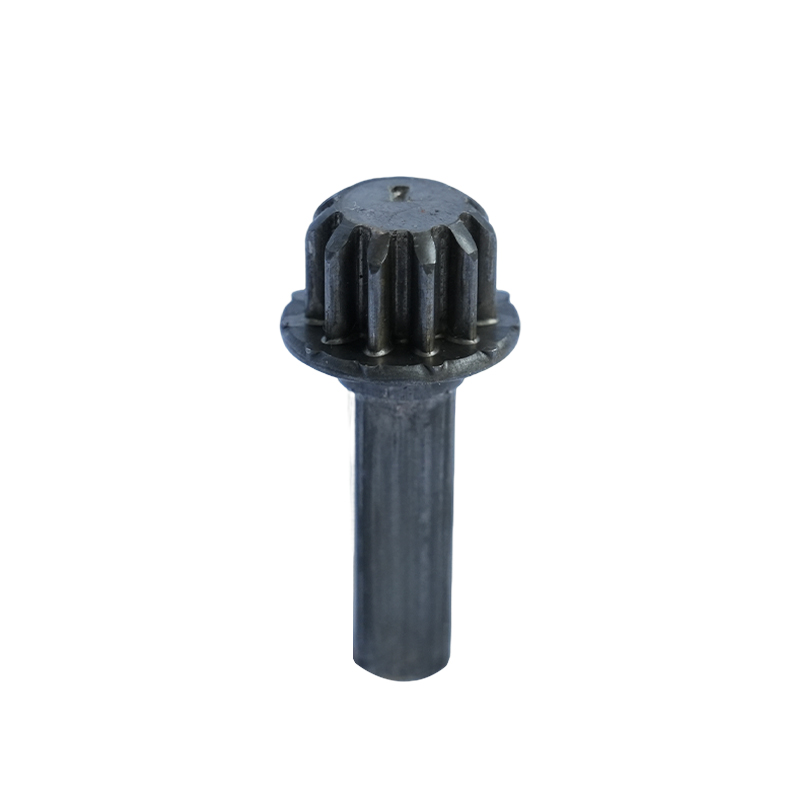
Romy Metal applies this process not only to conventional fasteners but also to special-shaped shafts, bushings, sleeves, connecting parts, adjustment components, and other custom cold heading solutions. The available product range demonstrates how cold forming can move beyond standard bolts and screws into functional precision components.
Near-Net-Shape Forming
Material displacement
Near-net-shape forming means that the manufacturing process creates a component close to its final dimensions. Instead of cutting away a large portion of the starting material, cold heading manufacturing moves the material into the die cavity.
This approach can improve material utilization, particularly for parts with a larger head, flange, collar, shoulder, or local diameter formed from smaller wire.
Progressive forming
A complex part is not necessarily created in one impact. Several dies may gradually redistribute the metal, allowing each station to perform a manageable amount of deformation.
Progressive forming helps control material flow, reduce cracking risk, and produce more detailed shapes than a single upsetting operation could reliably achieve.
Tooling-Driven Repeatability
Fixed forming geometry
Once the dies, punches, transfer system, and machine settings are stable, each production cycle follows the same mechanical sequence. This makes cold heading manufacturing especially valuable when thousands or millions of components must maintain consistent dimensions and appearance.
However, tooling repeatability does not remove the need for process control. Die wear, wire condition, lubrication, material variation, machine alignment, and secondary operations can still influence the finished part.
Production consistency
Cold heading tooling creates the main geometry mechanically rather than recalculating a tool path for every piece. This supports rapid and repeatable production after the tooling and process have been validated.
Buyers should therefore evaluate sample approval and long-run process capability separately. A few acceptable samples do not automatically prove that a supplier can control the same dimensions over an extended production run.
Grain Flow and Work Hardening
Continuous metal flow
Cold forming generally bends and redirects the material’s grain flow around the part geometry instead of cutting through it extensively. This can be beneficial in components subjected to repeated loading, torque, vibration, or tensile forces.
The actual mechanical result still depends on material grade, deformation level, heat treatment, geometry, surface condition, and service environment. It should not be assumed that every cold-headed component is automatically stronger than every machined component.
Work hardening
Plastic deformation at room temperature can increase hardness and strength in the deformed regions. At the same time, excessive deformation may reduce remaining ductility or create cracking if the material and process sequence are unsuitable.
This is why material selection and forming simulation are important parts of cold heading manufacturing, rather than decisions made only after the tooling has been built.
What Is CNC Machining?
CNC machining is a digitally controlled, subtractive manufacturing method. Cutting tools remove material from a workpiece according to programmed coordinates, speeds, feeds, tool paths, and machining sequences.
The broad category of machining includes operations such as turning, milling, drilling, boring, tapping, grinding, and broaching. Numerical control enables machine movements to follow programmed instructions, supporting repeatable production of detailed geometry.
NIST continues to study machining measurements, dynamic material behavior, and process models to help improve machining performance, reliability, and cost efficiency.
Subtractive Manufacturing
Material removal
CNC machining begins with a workpiece that is larger than the finished component. Tools remove material until the required surfaces and features remain.
This is highly flexible, but the removed chips, cutting time, tool wear, coolant, and handling become part of the recurring production cost.
Accessible cutting paths
A feature can generally be machined only when a cutting tool can reach it at a workable angle and depth. Multi-axis equipment expands access, but deep cavities, narrow internal corners, and long slender features can still create tooling or stability challenges.
The designer must consider not only whether a geometry can be drawn, but also whether a practical tool can enter, cut, clear chips, and maintain accuracy.
Digital Flexibility
Fast drawing revisions
Changing a CNC-machined component may require an updated drawing, revised program, different setup, or new fixture. It may not require an entirely new set of forming dies.
For prototypes and developing products, this flexibility reduces the commercial risk of changing dimensions before the design is frozen.
Low-volume suitability
When only a small number of parts are needed, dedicated cold-heading tooling may not be economical. CNC machining can produce the required pieces without spreading a major forming-tool investment across a limited order.
This does not mean machining always has a short setup time. Fixtures, tools, programming, inspection routines, and first-article validation may still be required.
Precision Feature Creation
Controlled local dimensions
CNC machining is useful when only specific areas need extremely tight dimensional control. Bearing seats, sealing diameters, grooves, cross holes, deep bores, threads, datum surfaces, or precision flats can be finished independently.
This local control is one reason why cold heading manufacturing and CNC machining are often complementary rather than mutually exclusive.
Complex internal geometry
Machining is frequently selected for off-center holes, intersecting passages, sharp internal details, deep pockets, and features that cannot be formed by practical punch-and-die movement.
The limitation may come from cutting-tool access rather than the external appearance of the part.
Cold Heading Manufacturing vs CNC Machining
The following table provides a practical comparison. It should be used as an initial screening tool rather than as a substitute for a part-specific engineering review.
| Decision factor | Cold heading manufacturing | CNC machining |
|---|---|---|
| Basic process | Forms metal through compressive force | Removes material with cutting tools |
| Typical economic strength | Repeat production and higher volumes | Prototypes, low volumes, and flexible production |
| Initial tooling | Usually requires dedicated dies and punches | May require programs, fixtures, jaws, and cutting tools |
| Recurring cycle cost | Can become highly efficient after validation | Cutting time repeats for every component |
| Material utilization | Usually high for suitable near-net shapes | Depends on the difference between stock and finished geometry |
| Design changes | Major changes may require new tooling | Many changes can be handled by revising the program or setup |
| External formed features | Strong capability for heads, flanges, shoulders, sleeves, and stepped shapes | Possible, but may require significant material removal |
| Deep or off-center holes | Often requires secondary processing | Generally better suited |
| Sharp internal corners | Limited by punch strength, die radii, and metal flow | Limited by cutter radius but usually more flexible |
| Production speed | High after tooling is proven | Depends on cutting time, setup, and number of operations |
| Surface finish | Good on properly formed surfaces | Excellent on controlled machined surfaces |
| Mechanical characteristics | May benefit from formed grain flow and work hardening | Depends mainly on starting material and subsequent treatments |
| Best sourcing strategy | Stable specifications and forecast demand | Developing designs or variable demand |
| Hybrid potential | Can create a near-net blank for finish machining | Can finish critical features on a cold-headed blank |
When Is Cold Heading Manufacturing Better Than CNC Machining?
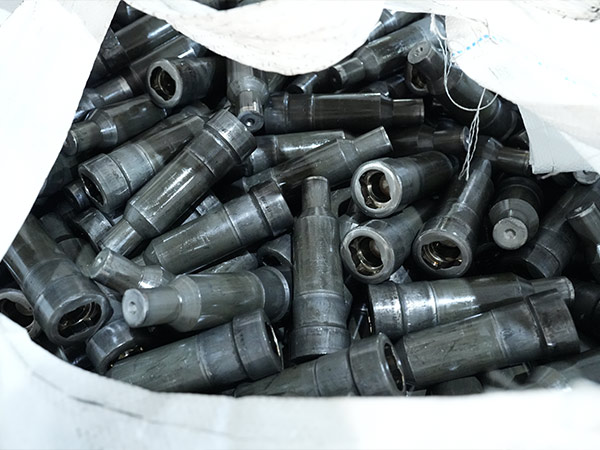
Cold heading manufacturing becomes especially attractive when the part has repeat demand, a formable geometry, stable specifications, and a significant difference between the starting bar size and the final part volume.
Stable Medium- or High-Volume Demand
Tooling amortization
Dedicated tooling is an upfront project cost, but it can be distributed across the total production quantity. As cumulative demand rises, the tooling contribution per part becomes smaller.
The correct calculation should use expected lifecycle demand rather than only the first purchase order. A program ordering 5,000 parts per month for several years is economically different from a one-time order for 5,000 pieces.
Forecast reliability
Cold heading manufacturing works best when the design and demand are sufficiently stable. Frequent engineering changes can reduce the value of tooling because revised geometry may require punch modifications, die changes, or a new forming sequence.
Buyers should consider whether the drawing is production-ready before approving tooling.
High Material-Removal Ratio
Oversized starting stock
Imagine a component with a narrow shaft and a much larger flange. CNC machining may require starting with bar stock large enough for the flange, then removing substantial material along the shaft.
Cold heading can potentially form the larger flange from smaller-diameter wire by moving material into the required area.
Expensive materials
Material utilization becomes more important when stainless steel, alloy steel, copper, aluminum, or another higher-value material is used. The cost of chips may be partially recovered through recycling, but recycling does not eliminate purchasing, cutting, handling, energy, and production-time costs.
A near-net-shape route can therefore affect more than raw-material spending.
Repetitive External Geometry
Heads and flanges
Parts with bolt-like heads, collars, shoulders, local enlargements, external splines, or stepped profiles are often promising candidates for cold heading manufacturing.
The geometry must still be evaluated for deformation ratio, corner radii, die release, punch strength, and the number of required forming stations.
Sleeves and bushings
Hollow sleeves and bushings may also be cold formed when wall thickness, length, diameter, bottom geometry, and material behavior are suitable.
Romy’s industrial and mechanical components include sleeves, bushings, shafts, bolts, pressure rods, valve-related parts, and other non-standard geometries developed for industrial applications.
Long Production Runs
Cycle-time leverage
A small cycle-time saving has a limited effect on ten parts but a substantial effect on hundreds of thousands of parts. High-speed forming allows the tooling investment to create value repeatedly over the life of the program.
Production rate should not be evaluated separately from rejection rate, inspection frequency, tool maintenance, machine availability, and secondary-processing capacity.
Consistent supply
Once the process is mature, cold heading manufacturing can support predictable replenishment schedules. This is useful for automotive, mobility, appliance, tool, construction, elevator, and machinery programs with repeat consumption.
The supplier must still maintain raw-material availability, spare tooling, maintenance plans, and traceability.
When Is CNC Machining the Better Choice?
CNC machining is usually the safer starting point when quantities are low, the design is still changing, or the component contains features that cannot be formed efficiently.
Prototype and Development Quantities
Design validation
Prototype parts allow engineers to evaluate fit, assembly, motion, sealing, strength, and installation before committing to production tooling.
CNC machining can create these parts directly from a revised digital model, making it practical for multiple development iterations.
Early functional testing
A machined prototype may not reproduce every mechanical characteristic of a future cold-headed part. Nevertheless, it can verify basic dimensions, assembly relationships, and application function.
If material flow or formed strength is critical, a later cold-headed sample stage should still be completed before mass production.
Frequent Engineering Changes
Unfrozen dimensions
When diameters, lengths, holes, or interfaces are still being revised, machining generally offers greater flexibility. The cost of changing a program is often lower than rebuilding a complete forming-tool set.
However, repeated changes still consume programming, setup, inspection, and project-management time.
Multiple product variants
CNC machining can be efficient when several similar variants share the same starting stock and setup. Programs can be adjusted to produce different lengths, grooves, threads, or hole arrangements.
A separate cold-heading tool may be required for each major formed geometry unless tooling can be designed with interchangeable elements.
Complex Internal Features
Deep bores and passages
Deep axial holes, intersecting oil channels, offset bores, and detailed internal profiles often favor CNC machining.
Cold heading may form a pilot hole or cavity, but secondary drilling, boring, reaming, or broaching may still be needed.
Sharp internal details
Metal flow and tool strength normally require practical radii in cold heading manufacturing. A component requiring a sharp pocket, narrow internal slot, or intricate cavity may be difficult or uneconomical to form.
Machining offers more control, provided a suitable cutter can reach the feature.
Very Tight Local Tolerances
Functional interfaces
Bearing fits, sealing surfaces, precision journals, and alignment datums may require tolerances or surface finishes beyond economical as-formed capability.
Instead of machining the entire component, manufacturers can cold form the main body and machine only these local interfaces.
Inspection strategy
The drawing should distinguish critical-to-function dimensions from non-critical dimensions. Assigning machining-level tolerances to every surface can increase tooling, inspection, and production costs without improving assembly performance.
The Romy Metal cold heading tolerance guide explains how buyers can identify critical dimensions, define inspection methods, and avoid unnecessarily tight requirements.
What Production Volume Justifies Cold Heading Tooling?
There is no universal minimum order quantity that automatically makes cold heading manufacturing economical. Tool complexity, material, component size, machining time, annual demand, part lifetime, secondary operations, and quality requirements can shift the break-even point substantially.
The following ranges are planning references rather than fixed industry rules.
| Estimated lifecycle quantity | Likely starting approach | Questions to evaluate |
| 1–100 pieces | CNC machining | Is this a prototype, test fixture, replacement part, or design study? |
| 100–1,000 pieces | Usually CNC or simple tooling | Is the design stable, and is machining time unusually high? |
| 1,000–10,000 pieces | Compare machining, cold heading, and hybrid routes | How complex is the tooling, and will orders repeat? |
| 10,000–100,000 pieces | Cold heading may become attractive | Can the geometry be formed with limited secondary processing? |
| More than 100,000 pieces | Strong cold-heading candidate when technically feasible | What tooling life, maintenance, automation, and quality controls are required? |
First-Order Quantity vs Lifecycle Quantity
First-order thinking
A buyer may reject cold heading because the first order cannot absorb the tooling cost. This approach can be misleading when the component will be reordered for several years.
The business case should include forecast demand, spare parts, service demand, product variants, and expected program life.
Lifecycle thinking
Lifecycle evaluation compares all future material, machine, labor, tooling, inspection, maintenance, logistics, and quality costs.
This gives procurement teams a more useful basis for selecting cold heading manufacturing than comparing only the first quotation.
Simple Tooling vs Complex Tooling
Basic formed parts
A relatively simple bolt-like or stepped component may require fewer stations and less complex tooling. Its economic break-even quantity may therefore be lower.
Tooling feasibility still depends on size, material, deformation, tolerances, and equipment range.
Multi-station special-shaped parts
A hollow sleeve, spline shaft, special gear form, multi-diameter pin, or asymmetric component may need multiple forming stages and more development work.
Such projects can still deliver strong long-run value, but the economic case requires a larger or more predictable production program.
Geometry: Which Parts Fit Each Process?
A part drawing may contain some features that strongly favor forming and others that strongly favor cutting. The objective is to identify the dominant cost and risk drivers.
Geometries Suited to Cold Heading Manufacturing
Axis-based components
Components arranged mainly around a central axis are often easier to feed, transfer, and form. Examples include pins, sleeves, shafts, bushings, screws, bolts, rivets, collars, and stepped rods.
Limited asymmetric features may also be possible with correctly designed tooling.
Local diameter changes
Cold heading manufacturing is effective at moving material to create a head, flange, collar, or shoulder without starting from oversized stock.
This can be particularly valuable when the final component combines a long narrow section with one or more larger local features.
Integrated functional features
Splines, flats, recesses, lobes, teeth, and special drive forms may sometimes be integrated during forming. Successful integration can eliminate separate turning, milling, broaching, or assembly operations.
The Romy automotive power steering gear shaft is an example of a functional shaft whose two-flat cavity is described as being created through one-step cold heading.
Geometries Suited to CNC Machining
Off-axis details
Cross holes, offset bores, eccentric surfaces, side pockets, and intersecting passages usually require machining or another secondary process.
These features may be added after forming if the main body still benefits from cold heading manufacturing.
Undercuts and inaccessible features
A forming punch must enter and leave the part, while the finished component must also release from the die. Severe undercuts or trapped geometry can prevent straightforward forming.
CNC machining can create some of these features using angled tools, multi-axis movement, or special cutters.
Thin or highly variable walls
Thin walls may buckle, tear, or become dimensionally unstable during deformation. Large wall-thickness changes may also cause uneven metal flow.
A forming simulation or trial is often needed before committing to tooling.
The Hybrid Process: Cold Heading Plus CNC Machining
For many precision components, the most economical route is not cold heading manufacturing versus CNC machining. It is cold heading manufacturing followed by targeted CNC finishing.
Form the Main Volume
Near-net blank
Cold heading can create the main shaft, flange, sleeve, collar, or head close to its final shape. This reduces the amount of stock that later machining must remove.
The formed blank can also provide repeatable locating surfaces for the machining fixture.
Integrated rough features
Pilot holes, recesses, external forms, and basic cavities may be created during forming. Machining then finishes only the dimensions that require greater precision or a geometry that cannot be formed directly.
This approach avoids using CNC cycle time for surfaces that do not need it.
Machine the Critical Features
Precision journals
Bearing seats, sealing diameters, thread reliefs, datum faces, and concentric interfaces can be finish turned or ground after forming.
The drawing should specify which dimensions are controlled in the forming stage and which are controlled in the finishing stage.
Holes and passages
Cross drilling, deep drilling, reaming, tapping, or broaching can be applied after cold heading manufacturing.
A well-designed process leaves enough machining allowance without creating unnecessary stock.
Avoid Duplicated Precision
Do not over-form
Trying to achieve machining-level accuracy on every formed feature may increase tooling complexity and shorten die life.
Some dimensions are more economically controlled during a secondary operation.
Do not over-machine
Machining every surface of a near-net blank can remove the material-utilization and cycle-time benefits that justified forming.
The engineering team should identify the minimum secondary processing needed to achieve function.
Cold Heading Manufacturing Cost vs CNC Machining Cost
The lowest quoted unit price does not always represent the lowest total acquisition cost. A meaningful comparison should include one-time costs, recurring costs, quality risks, and the expected program duration.
| Cost element | Cold heading manufacturing | CNC machining |
| Engineering review | Forming feasibility and process sequence | Machining strategy and tool-path planning |
| One-time tooling | Dies, punches, transfer tools, gauges | Fixtures, jaws, special cutters, programs, gauges |
| Raw material | Wire or prepared blank close to required volume | Bar, tube, billet, forging, or other stock |
| Recurring machine time | Usually decreases strongly in high-volume production | Continues according to cutting cycle for every part |
| Material loss | Generally limited for suitable formed geometry | Can be significant when removing large volumes |
| Tool wear | Dies and punches require maintenance | Cutting inserts, drills, mills, taps, and abrasives require replacement |
| Secondary operations | May include machining, rolling, heat treatment, and coating | May include deburring, heat treatment, grinding, and coating |
| Inspection | Formed dimensions, tooling wear, and process capability | Setup verification, tool-offset control, and machined dimensions |
| Change risk | Tooling changes may be expensive | Programs and fixtures may be easier to revise |
| Long-run economics | Strong when demand is stable and geometry is suitable | Strong when complexity or flexibility outweighs cycle cost |
Piece Price
Visible quotation
Piece price is easy to compare but may exclude tooling, inspection equipment, packaging, engineering changes, freight, or quality documentation.
Purchasing teams should ask suppliers to state what is included.
Volume assumptions
A quoted piece price may be based on a specific annual volume, batch size, raw-material purchase quantity, or machine utilization.
Comparisons are meaningful only when suppliers use the same assumptions.
Tooling Cost
One-time investment
Cold heading tooling is often treated as an additional expense, but it is more accurately viewed as production infrastructure dedicated to the component.
The buyer should clarify tooling ownership, expected life, repair responsibility, storage, replacement conditions, and revision costs.
Tooling maintenance
Dies and punches are wear items. A mature production plan should include preventive maintenance, spare tooling, dimensional monitoring, and replacement triggers.
Ignoring maintenance can lead to dimensional drift and unexpected supply interruptions.
Quality Cost
Rejection and rework
A low production price can be offset by sorting, rework, assembly interruption, field failure, or line stoppage.
Supplier evaluation should include process capability, material traceability, inspection methods, change control, and corrective-action systems.
Assembly performance
The final measure is whether the component works reliably in the customer’s assembly. Sample approval should include fit and functional testing rather than dimensional inspection alone.
For bolts, screws, and studs, buyers may also need to specify applicable mechanical-property requirements such as those covered by ISO 898-1. The exact standard depends on component type, material, thread, application, and customer requirements.
Material Selection for Cold Heading Manufacturing
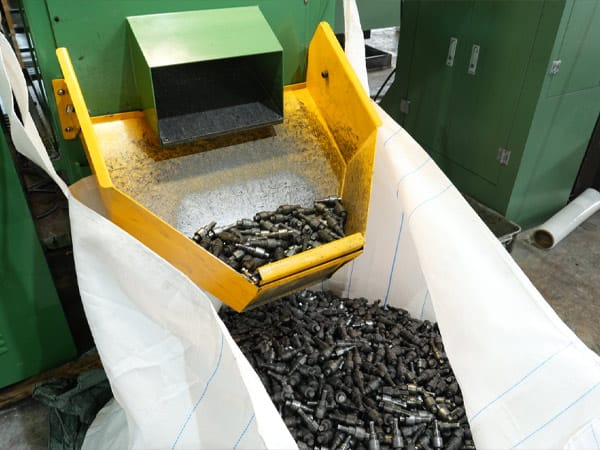
A material that machines well is not automatically ideal for severe cold forming. Likewise, a highly formable material may require heat treatment or surface engineering to meet the final service requirement.
Ductility
Forming capacity
Ductility allows the material to undergo plastic deformation without cracking. Cold heading manufacturing may require annealed or specially prepared wire when the forming sequence involves severe diameter changes or deep extrusion.
The permitted deformation must be evaluated across all stations, not only in the final shape.
Material consistency
Variation in chemistry, hardness, surface condition, inclusion content, or wire diameter can change forming behavior.
Stable raw-material specifications support stable tooling loads and dimensional results.
Strength
As-formed properties
Work hardening may increase local strength during cold heading manufacturing. However, the amount and distribution of strain vary across the component.
Engineering decisions should be based on testing and specification requirements rather than assumptions about the process name.
Heat-treated properties
Carbon and alloy steel parts may undergo quenching, tempering, case hardening, or another heat-treatment route after forming.
Heat treatment can also change dimensions, hardness distribution, surface condition, and residual stress, which must be considered during tolerance planning.
Machinability
Secondary finishing
A hybrid component must be both formable and reasonably machinable. A material selected only for cold-forming performance may create difficulties during drilling, turning, or tapping.
The full manufacturing route should therefore be reviewed before the material is finalized.
Tool life
Hardness, work hardening, abrasiveness, and alloy content influence cutting-tool life. Machining allowance should be controlled so that the supplier removes only the material needed to achieve the final feature.
A Practical Process-Selection Framework
The following seven-step framework helps engineers and buyers compare the two processes consistently.
Step 1: Define the Function
Identify how the component carries load, transmits torque, locates another part, seals, rotates, slides, locks, or supports an assembly.
Functional requirements should drive the manufacturing method, not the appearance of a previous component.
Step 2: Mark Critical Dimensions
Separate critical-to-function dimensions from general dimensions. Include datums, fit requirements, concentricity, runout, surface finish, threads, sealing areas, and inspection methods.
This prevents unnecessary precision from being added to non-critical features.
Step 3: Estimate Lifecycle Volume
Provide annual demand, batch quantity, expected program life, ramp-up schedule, and spare-part demand.
A reliable forecast allows the supplier to compare tooling investment with recurring machining cost.
Step 4: Review Forming Feasibility
Evaluate material flow, diameter ratios, hole depth, wall thickness, radii, component length, station count, tool access, and die release.
Romy’s existing guide to advanced cold heading manufacturing technology provides additional background on multi-station systems, tooling, process control, and typical applications.
Step 5: Identify Secondary Operations
List all required drilling, turning, rolling, grinding, heat treatment, cleaning, plating, coating, passivation, deburring, and inspection operations.
A process that appears inexpensive at the forming stage may become costly when too many secondary steps are added.
Step 6: Compare Total Cost
Request quotations for CNC machining, cold heading manufacturing, and a hybrid route when appropriate.
Compare tooling, material, unit cost, inspection, expected rejection, lead time, change risk, packaging, logistics, and lifecycle demand.
Step 7: Validate With Samples
Approve dimensions, material, surface treatment, mechanical properties, assembly performance, appearance, and documentation.
After sample approval, define production-control requirements and change-notification rules before mass production begins.
What Should Buyers Include in an RFQ?
A complete RFQ allows suppliers to recommend the correct process and reduces assumptions during quotation.
Drawing and Model
Controlled drawing
Provide a revision-controlled 2D drawing with dimensions, tolerances, datums, material, heat treatment, surface treatment, and inspection notes.
A 3D model can support feasibility review but should not replace a controlled drawing when tolerances and acceptance criteria matter.
Existing sample
A physical sample can help the supplier understand function and geometry, but it does not reveal the original material specification, tolerance limits, or mechanical requirements.
Sample-based replication should therefore include material testing and customer confirmation.
Volume Information
Annual demand
State realistic annual volume and typical release quantity. Avoid providing only an optimistic maximum without explaining the expected purchasing pattern.
Suppliers need this information to select equipment, tooling strategy, cavity count, and raw-material purchasing plans.
Program duration
Indicate whether the component is a one-time order, replacement part, developing program, or long-term production item.
This strongly affects whether cold heading manufacturing can justify dedicated tooling.
Application Requirements
Service conditions
Explain load, speed, vibration, torque, temperature, corrosion exposure, lubrication, and expected life.
A supplier cannot reliably recommend material or processing without understanding the operating environment.
Quality documentation
Specify whether the project requires material certificates, dimensional reports, PPAP, control plans, process capability data, inspection records, traceability, or special packaging.
The required documentation can influence both quotation and lead time.
How Romy Metal Supports Process Selection
Romy Metal’s website presents custom cold-heading capabilities covering non-standard sleeves and bushings, special-shaped shafts, gears, splines, polygonal bolts, long-rod components, dimming screws, and other drawing-based parts. Its listed materials include carbon steel, stainless steel, aluminum, copper, and custom alloys.
Drawing and Requirement Review
The engineering review should consider whether the component can be completely formed, should remain CNC machined, or would benefit from a near-net cold-headed blank with secondary machining.
This early review can prevent unnecessary tool development and reduce later drawing revisions.
Tool and Sample Development
Romy states that its customization process covers requirement analysis, engineering and quotation, prototype approval, mass production, inspection, and delivery.
Samples can be used to verify assembly fit, critical dimensions, material performance, and the proposed inspection method before production release.
Product-Specific Experience
The company’s full product range includes automotive shafts, sleeves, valve-related components, special bolts, pressure rods, gears, inserts, bushings, and other industrial parts.
These products illustrate how cold heading manufacturing can support components that require more functional geometry than a conventional standard fastener.
Technical Discussion Before Quotation
For a new component, buyers can send the drawing, expected material, annual quantity, application, tolerances, secondary-process requirements, and quality documents through the Romy Metal contact page.
The goal of the first discussion should be process feasibility and risk identification, rather than requesting a unit price before the manufacturing route is understood.
Common Process-Selection Mistakes
Choosing Only by Unit Price
A low initial unit price may exclude tooling replacement, secondary processing, inspection, scrap, logistics, or future engineering changes.
Compare quotations on the same technical and commercial basis.
Choosing Only by Tooling Cost
Avoiding tooling may appear economical for the first order while increasing recurring machining cost throughout the product lifecycle.
Calculate the break-even point using realistic cumulative demand.
Applying Tight Tolerances Everywhere
Not every surface controls assembly function. Excessively tight tolerances can add machining, grinding, inspection, and rejection without improving performance.
Use functional tolerancing and identify critical characteristics clearly.
Ignoring Secondary Operations
A part may be formable but still require drilling, threading, heat treatment, coating, grinding, or sorting.
The final process route must be evaluated as one connected system.
Freezing the Process Too Late
Inviting a cold-heading supplier only after the geometry is fully frozen may limit opportunities to improve material flow or integrate features.
Early supplier involvement can reveal small design changes that simplify tooling and remove secondary operations.
Assuming One Process Must Make Everything
Forcing an entire component into either forming or machining can create unnecessary cost.
A hybrid route often provides a more practical balance between production efficiency and feature precision.
Conclusion
Cold heading manufacturing is often the stronger choice for stable, repeatable production of formable components with significant lifecycle demand. It can offer high material utilization, rapid production, integrated external features, and consistent geometry after tooling validation.
CNC machining remains the better choice for prototypes, low-volume programs, frequently revised designs, complex internal features, off-axis details, and components whose geometry does not support practical material flow.
The best decision is frequently a hybrid process. Cold heading creates the main material-efficient shape, while CNC machining finishes only the holes, journals, threads, grooves, datums, or surfaces that need greater precision.
Before choosing a route, buyers should compare:
- Component function
- Geometry and material flow
- Material grade and condition
- Critical tolerances
- Surface-finish requirements
- Annual and lifecycle volume
- Dedicated tooling
- Secondary operations
- Inspection and documentation
- Engineering-change risk
- Total landed cost
A process decision based on these factors will be more reliable than selecting cold heading manufacturing or CNC machining from unit price alone.
FAQ
Is cold heading manufacturing cheaper than CNC machining?
Cold heading manufacturing can be less expensive at medium or high volumes when the geometry is suitable and the tooling cost can be distributed across many parts. CNC machining is often more economical for prototypes, small quantities, unstable designs, or components requiring extensive internal and off-axis features.
The correct comparison should include tooling, raw material, machine cycle time, secondary processing, inspection, expected rejection, and lifecycle demand.
How many parts are needed before cold heading becomes worthwhile?
There is no fixed quantity. Simple parts may justify tooling at a few thousand pieces, while complex multi-station components may require much higher lifecycle demand.
Buyers should ask the supplier to calculate a break-even quantity based on both the cold-heading route and the complete CNC-machining route.
Can cold heading manufacturing produce complex parts?
Yes. Multi-station cold heading manufacturing can produce shafts, sleeves, bushings, flanges, recesses, splines, special heads, drive forms, and other non-standard geometry.
Its limitations are usually related to material flow, deformation ratio, punch access, die release, thin walls, sharp corners, component size, and tooling strength.
Does cold heading make a part stronger?
Cold forming can create continuous grain flow around the formed geometry and may increase local strength through work hardening. However, final strength depends on material, deformation, heat treatment, geometry, surface condition, and service loading.
Mechanical performance should be verified through specifications and testing rather than assumed from the manufacturing method alone.
Can cold heading and CNC machining be used together?
Yes. This is often the most economical route for precision components.
Cold heading manufacturing creates a near-net blank, while CNC machining adds critical holes, bearing surfaces, threads, grooves, flats, or other details that cannot be formed economically.
Which process is better for prototypes?
CNC machining is usually better for early prototypes because it avoids dedicated forming dies and supports fast dimensional revisions.
Once the design is stable and production demand is confirmed, a cold-headed sample should be produced if the final component will use cold heading manufacturing.
Which process creates less material waste?
For a suitable geometry, cold heading manufacturing normally creates less direct material loss because it redistributes metal rather than cutting away large volumes.
Machining waste depends on the starting-stock size, finished geometry, number of operations, and whether the chips can be recovered.
Can stainless steel be cold headed?
Many stainless steel grades can be cold headed, but their ductility, work-hardening rate, wire condition, lubrication, deformation level, and tooling loads must be evaluated.
The supplier may recommend a specific material condition, intermediate processing, additional forming stations, or secondary heat treatment.
Can cold heading achieve CNC-level tolerances?
Some dimensions can be controlled accurately through cold heading manufacturing, but not every feature will economically reach the same tolerance or surface finish as precision machining or grinding.
A common solution is to form general dimensions and machine only the critical functional surfaces.
What information should I send for a process recommendation?
Provide:
- A 2D drawing and available 3D model
- Material grade
- Heat-treatment requirements
- Surface-treatment requirements
- Critical dimensions and datums
- Functional application
- Annual and lifecycle volume
- Expected batch quantity
- Required inspection documents
- Current manufacturing problems
- Target sample and production schedule
The more complete the information, the more accurately the supplier can compare cold heading manufacturing, CNC machining, and hybrid production.