
Key Takeaways
- Deep engineering explanation of the cold heading process and deformation mechanics
- Global fastener manufacturing industry data and production trends
- Advanced multi-stage forming system architecture
- Tooling life cycle, failure modes, and cost optimization models
- Quality inspection standards and international certification systems
- Automotive, aerospace, and construction industry applications
- Automation, AI monitoring, and smart manufacturing trends
- Procurement and supplier evaluation framework
Table of Contents
Introduction
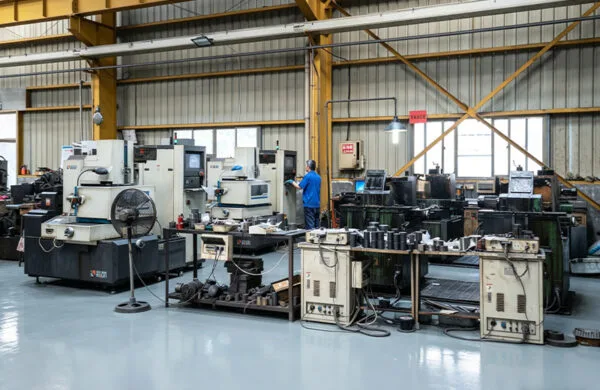
The cold heading process is one of the most widely used metal forming technologies in modern industrial production, particularly in the fastener manufacturing sector.
According to global manufacturing reports, more than 70% of standard fasteners worldwide (bolts, screws, rivets, pins) are produced using cold forming technology rather than machining or hot forging.
This process is essential in industries where:
- High production efficiency is required
- Material waste must be minimized
- Mechanical strength must be enhanced
- Cost control is critical in mass production
Modern industrial systems rely heavily on automated cold forming lines capable of producing hundreds to thousands of parts per minute.
Engineering Fundamentals of Cold Heading Process (Deep Technical Layer)
The cold heading process is fundamentally governed by plastic deformation mechanics, where metallic materials are reshaped permanently under high compressive stress at room temperature without thermal softening.
Unlike thermal forming methods, this process relies entirely on mechanical energy transfer and material ductility limits, making it highly efficient for mass production of fasteners and precision components.
Core Metallurgical Principle: Work Hardening
During deformation at ambient temperature, metal undergoes irreversible microstructural transformation.
Microstructural Evolution Mechanism
When stress exceeds yield strength:
- Dislocation density increases exponentially
- Crystal lattice distortion accumulates
- Grain boundaries become compressed and elongated
- Slip systems activate within the metal structure
This phenomenon leads to strain hardening, which significantly improves mechanical performance.
Engineering Impact of Work Hardening
As deformation increases:
- Tensile strength increases
- Hardness improves
- Fatigue resistance is enhanced
- Ductility decreases gradually
This trade-off is critical in fastener design engineering, especially for load-bearing applications such as automotive and structural bolts.
Engineering Formula Insight (Deformation Stress)
Yield stress increases according to:
- σ = σ₀ + kεⁿ
Where:
- σ = final stress
- σ₀ = initial yield stress
- ε = strain
- k, n = material constants
This explains why cold formed parts often outperform machined components in fatigue resistance.
Engineering Interpretation
- Higher ε (strain) → exponential increase in resistance
- Higher n value → better strain hardening capability
- Low ductility materials fail earlier under high ε conditions
Practical Manufacturing Insight
In industrial fastener production:
- Medium carbon steel exhibits optimal k/n balance
- Stainless steel requires higher forming force
- Alloy steel provides best fatigue performance after deformation
Industrial Cold Heading Process System Architecture
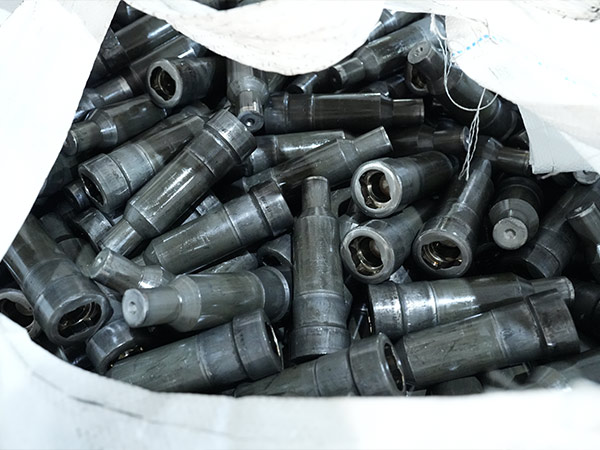
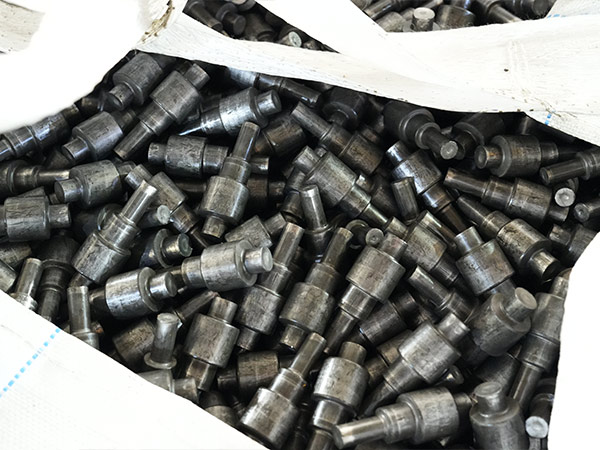
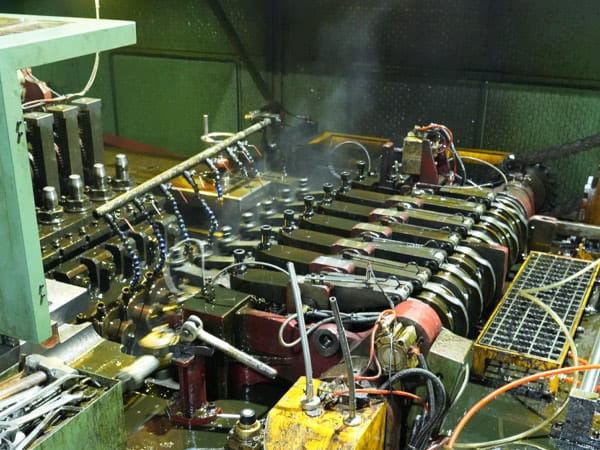
Modern cold heading process production lines are integrated multi-system manufacturing platforms combining mechanical, hydraulic, and automation technologies.
1. Wire Feeding & Precision Straightening System (Extended)
This subsystem ensures material consistency before deformation begins.
Advanced Technical Features:
- Servo-controlled wire feeding system (precision ±0.02 mm)
- Multi-roller straightening assembly for stress relief
- Automatic lubrication coating (phosphate / zinc-based films)
- Real-time diameter monitoring sensors
Engineering Purpose (Expanded)
- Eliminates residual coil stress
- Ensures uniform feed resistance
- Prevents eccentric deformation during heading
- Stabilizes production repeatability
Industrial Performance Range
- Feed speed: 3–6 m/s (standard lines)
- High-speed lines: up to 8 m/s
- Straightness tolerance: <0.3 mm/m
2. Multi-Stage Cold Forming Unit (High-Speed Forming Core)
This is the central deformation module of the cold heading process system.
Machine Configuration Types
- 2-die 3-blow machines (basic fasteners)
- 3-die 4-blow systems (medium complexity parts)
- 5-stage progressive forming machines (high precision)
- CNC fully automated cold heading systems
Engineering Process Flow
Wire → Cutting → Upsetting → Extrusion → Head Formation → Trimming
Each stage distributes deformation load to prevent material cracking.
Production Performance Metrics
- Standard bolt output: 300–600 pcs/min
- High-speed systems: 800+ pcs/min (optimized alloys)
- Cycle time per part: 0.08–0.2 seconds
Engineering Insight: Load Distribution Logic
Multi-stage forming reduces peak stress per station by 30%–50%, significantly improving die life and dimensional accuracy.
3. Die & Punch System Engineering (High-Stress Interface Design)
The die-punch interface is the most critical stress zone in the cold heading process.
Advanced Material Engineering
- Tungsten carbide inserts (high wear resistance)
- Powder metallurgy tool steel (shock resistance)
- DLC / TiN nano-coatings (friction reduction)
Stress Performance Characteristics
- Localized compressive stress: up to 2500 MPa
- Impact frequency: >300 cycles/min
- Thermal accumulation: controlled below 120°C in continuous operation
Die Failure Mechanisms
- Micro-crack propagation due to cyclic loading
- Abrasive wear from high-friction contact
- Edge chipping under misalignment stress
4. Automatic Ejection & Material Transfer System (Flow Optimization Layer)
This subsystem ensures uninterrupted production continuity.
System Components
- Mechanical ejector arms
- Pneumatic-assisted part release
- Conveyor synchronization units
- Anti-jam detection sensors
Engineering Purpose
- Prevents part accumulation in die cavity
- Maintains continuous high-speed production
- Reduces downtime due to manual clearing
Optimization Insight
Proper ejection design improves overall line efficiency by 12%–18% in high-volume production environments.
Integrated Engineering Insight: System Efficiency of Cold Heading Process
When all subsystems operate in synchronization:
- Total line efficiency: 85%–95%
- Scrap rate: <1% in optimized systems
- Energy utilization efficiency: significantly higher than machining systems
Advanced Engineering Trend: Smart Cold Heading Systems
Modern manufacturing is evolving toward intelligent production lines.
Key technologies include:
- AI-based defect detection
- Real-time load monitoring
- Predictive die wear analytics
- Digital twin simulation of forming stress
These systems optimize the cold heading process by reducing downtime and improving precision consistency.
Cold Heading Process vs Global Manufacturing Methods (Deep Comparison)
Engineering Performance Comparison
| Feature | Cold Heading Process | CNC Machining | Hot Forging |
|---|---|---|---|
| Material Utilization | 95%+ | 60–70% | 85–90% |
| Production Speed | Very High | Medium | Medium |
| Strength Performance | High | Medium | High |
| Tooling Cost | Medium | Low | Medium |
| Unit Cost (Mass Production) | Very Low | High | Medium |
Engineering Insight
Cold heading is most cost-efficient when production exceeds 100,000 units per batch, due to tooling amortization effects.
Cold Heading Process Material Engineering Analysis
Common Industrial Materials
- SAE 10B21 steel (fasteners)
- 35K, 45K carbon steel
- 304 / 316 stainless steel
- Aluminum 6061 / 7075 alloys
Material Selection Criteria
Key parameters:
- Elongation rate > 10%
- Tensile strength balance
- Low fracture sensitivity
- Stable grain structure
Engineering Failure Risk
Materials with low ductility will exhibit:
- Cracking during upsetting
- Surface folding defects
- Die overload conditions
Cold Heading Process Tool Life Cycle Engineering
Die Wear Mechanisms
Main wear types:
- Abrasive wear
- Adhesive wear
- Fatigue micro-cracking
Tool Life Estimation Model
Typical die lifespan:
- Low carbon steel: 500,000 – 1.5 million cycles
- Alloy steel: 1 – 3 million cycles
- Carbide tooling: 5 – 10 million cycles
Cost Optimization Insight
Tooling cost accounts for:
- 15%–25% of total production cost in small batches
- <5% in large-scale mass production
Quality Control System in Cold Heading Process
Inspection Stages
- Raw material inspection (chemical composition)
- In-process dimensional monitoring
- Final tensile strength testing
- Surface defect detection
Testing Standards
- ISO 898-1 (fastener mechanical properties)
- ASTM F568M (metric bolts)
- DIN 933 / DIN 931 standards
Common Testing Equipment
- Optical measurement systems
- Hardness testers (Rockwell, Vickers)
- Tensile strength testing machines
Global Industry Case Studies
Case Study 1: Automotive Bolt Mass Production (Germany)
- Production volume: 120 million units/year
- Process: multi-stage cold heading system
- Defect rate: <0.15%
Result:
Reduced production cost by 32% compared to machining.
Case Study 2: Construction Fastener Supply Chain (Middle East)
- Application: steel structure buildings
- Requirement: corrosion-resistant fasteners
Result:
Cold heading + zinc coating extended lifespan to 15+ years.
Case Study 3: Aerospace Fastener Optimization (USA)
- Material: titanium alloy cold forming
- Challenge: extreme fatigue resistance
Result:
Achieved 40% improvement in fatigue life compared to traditional machining.
Cold Heading Process Automation & Industry 4.0 Trends
Smart Manufacturing Integration
Modern factories use:
- IoT-based machine monitoring
- AI defect detection systems
- Predictive maintenance algorithms
Digital Twin Simulation
Computer-Aided Engineering systems simulate:
- Material deformation flow
- Die stress distribution
- Process optimization parameters
Automation Impact
- 30% reduction in labor cost
- 20% increase in production speed
- 50% reduction in defect rate
Global Market Trends for Cold Heading Process Industry
Market Growth Data
- Global fastener market CAGR: 4.5%–6% (2025–2030)
- Asia-Pacific dominates over 55% of production capacity
- Automotive sector consumes ~40% of cold-formed fasteners
Industry Drivers
- EV (electric vehicle) manufacturing expansion
- Infrastructure development projects
- Aerospace lightweight material demand
- Industrial automation growth
Procurement Strategy: How to Select Cold Heading Process Suppliers
Step 1: Machine Capability
Check:
- Max forming tonnage
- Multi-stage forming capability
- Automation level
Step 2: Quality Assurance System
Look for:
- ISO 9001 certification
- Full traceability system
- Batch inspection reports
Step 3: Production Stability
Evaluate:
- Defect rate consistency
- Tooling replacement cycle
- Machine uptime (>95% ideal)
Step 4: Export Experience
Important factors:
- Packaging standards
- International compliance documents
- Logistics capability
Conclusion
The cold heading process remains a cornerstone of modern manufacturing, combining high efficiency, material savings, and superior mechanical performance.
With advancements in automation, digital monitoring, and precision tooling, it continues to evolve into a highly optimized industrial system capable of meeting the demands of global high-volume production.
Its dominance in fastener manufacturing is expected to increase further as industries shift toward lightweight design, cost efficiency, and sustainable production systems.
FAQ
Why is cold heading widely used in fastener manufacturing?
Because it enables high-speed mass production with minimal waste and excellent mechanical strength.
What is the main limitation of cold heading process?
It is less suitable for extremely complex geometries or brittle materials.
How does cold heading improve material strength?
Through work hardening and grain structure compression during deformation.
Is cold heading cheaper than machining?
Yes, especially in large-scale production due to minimal material waste and high speed.
What industries rely most on cold heading?
Automotive, construction, aerospace, machinery manufacturing, and electronics.