
Key Points
- Deep understanding of cold heading manufacturing principles and industrial value
- Global standards and certifications shaping fastener production quality
- Advanced multi-stage forming systems and servo automation integration
- Real-world engineering cases from automotive and heavy industry sectors
- Cost structure analysis and ROI optimization in mass production
- Defect control, die design optimization, and precision engineering strategies
- Industry 4.0 smart factory transformation trends in cold forming
Introduction
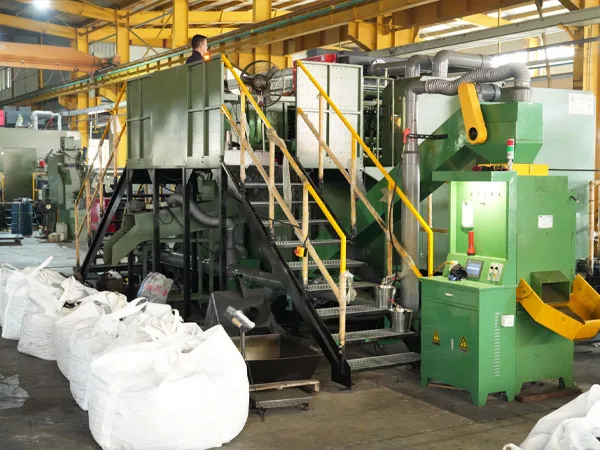
In the global industrial supply chain, cold heading manufacturing has become one of the most critical technologies for producing high-strength fasteners, precision connectors, and structural components.
According to industry research from the International Fastener Industry Association (IFIA), more than 70% of standard fasteners used in automotive production are manufactured using cold forming technologies, primarily cold heading processes.
This method has replaced traditional machining in large-scale production due to three key advantages:
- Material efficiency above 90–95%
- Production speeds exceeding 200–300 pcs/min
- Mechanical strength improvement up to 20–40% due to grain flow optimization
As industries move toward lightweight engineering and cost optimization, cold heading technology continues to evolve into a highly automated, intelligent manufacturing system.
Table of Contents
Global Industry Overview of Cold Heading Manufacturing
Market Scale Insight
The global cold forming and fastener manufacturing market is valued at over USD 80+ billion, with steady growth driven by:
- Automotive electrification
- Infrastructure expansion
- Aerospace lightweight component demand
- Industrial automation growth
Regional Production Distribution
- Asia-Pacific: ~55% global production share
- Europe: ~25%
- North America: ~15%
- Others: ~5%
Engineering Foundation of Cold Heading Manufacturing
Metallurgical Principle: Plastic Deformation at Room Temperature
Cold heading manufacturing relies on plastic deformation theory, where metal is reshaped without heating.
Core Scientific Concept
When force is applied:
- Atomic lattice rearranges
- Grain structure elongates
- Internal stress is redistributed
Cold Work Hardening Effect
Definition
Cold working increases metal hardness and tensile strength through deformation.
Typical Improvement Range
- Tensile strength increase: +15% to +35%
- Hardness increase: +10% to +25%
Grain Flow Optimization Concept
Instead of cutting metal fibers, cold heading preserves continuous grain flow, which significantly improves fatigue resistance.
Cold Heading Manufacturing System Architecture
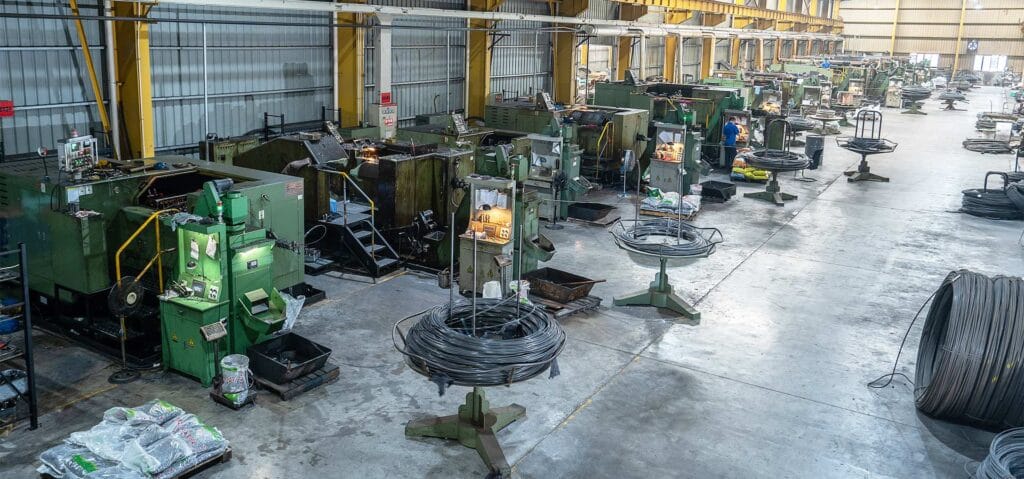
Multi-Station Cold Heading Machine
Modern machines typically include:
- 2-die / 3-die / 4-die systems
- Progressive forming stations
- Automatic feeding units
- Servo-driven punches
Technical Machine Parameters (Industrial Standard)
| Parameter | Typical Range |
|---|---|
| Production Speed | 80–320 pcs/min |
| Forming Force | 20–200 tons |
| Tolerance Accuracy | ±0.01–0.05 mm |
| Wire Diameter Range | 1–30 mm |
| Die Life Cycle | 300,000–1,500,000 cycles |
Servo-Controlled Feeding System
Concept
Servo motors ensure precise wire positioning for consistent forming accuracy.
Benefits:
- Reduced scrap rate (<2%)
- Stable batch production
- Improved dimensional consistency
Cold Heading Manufacturing vs Traditional Metal Forming
Expanded Engineering Comparison
| Feature | Cold Heading | Hot Forging | CNC Machining |
|---|---|---|---|
| Material Efficiency | 90–95% | 70–85% | 40–60% |
| Energy Consumption | Low | High | Medium |
| Surface Finish | Excellent | Medium | Excellent |
| Strength Improvement | High | Medium | Low |
| Mass Production Suitability | Excellent | Good | Poor |
Engineering Insight
Cold heading eliminates cutting waste, making it one of the most sustainable metal forming methods in modern manufacturing.
Industry Standards and Quality Systems
ISO 898-1 Fastener Standard
Defines mechanical properties of carbon steel bolts:
- Tensile strength classes: 4.6 / 8.8 / 10.9 / 12.9
ASTM F568M Standard
Specifies metric fastener mechanical requirements used in global engineering systems.
DIN 7985 / DIN 933 Standards
Widely used in European fastener manufacturing industries.
Quality Control Concept
Modern factories implement:
- SPC (Statistical Process Control)
- CPK monitoring
- Real-time defect tracking systems
Cold Heading Manufacturing Applications (Expanded)
Automotive Industry Case
Application Areas
- Engine bolts
- Transmission shafts
- Chassis connectors
Performance Requirement
- High fatigue resistance (>10⁶ cycles)
- Tight dimensional tolerance ±0.02 mm
Wind Energy Industry
Used in:
- Tower flange bolts
- Structural anchoring systems
Railway Industry
Used in:
- Track fastening systems
- High-load structural joints
Aerospace Industry
Critical use in:
- Lightweight titanium fasteners
- High-stress structural connectors
Real Industrial Case Study
Automotive Tier-1 Supplier Upgrade Project
Before Upgrade
- Machining-based production
- High material waste (~45%)
- Low production speed (~30 pcs/min)
After Cold Heading Implementation
- Waste reduced to 8%
- Production increased to 220 pcs/min
- Unit cost reduced by 32%
Cold Heading Manufacturing Defect Analysis
Crack Formation Mechanism
Caused by:
- Excessive deformation ratio
- Low ductility material
- Improper die angle
Fold Defects
Cause
Metal flows improperly during multi-stage forming.
Eccentricity Issues
Cause
Misalignment in feeding system or worn tooling.
Process Optimization Engineering
Die Design Optimization
Advanced simulation tools (FEA analysis) are used to:
- Predict stress distribution
- Extend tool life
- Reduce cracking risk
Lubrication Engineering
Modern lubricants include:
- Phosphate coatings
- Polymer-based dry films
Energy Efficiency Optimization
Servo-driven systems reduce energy consumption by up to:
- 20–35% compared to hydraulic systems
Cost Structure and ROI Analysis
Manufacturing Cost Breakdown
- Raw material: 50–60%
- Machine depreciation: 15–20%
- Labor: 10–15%
- Energy: 5–10%
- Tooling: 10–15%
ROI Improvement Model
Cold heading systems typically achieve:
- Payback period: 12–24 months
- Production efficiency increase: +40–70%
Smart Factory and Industry 4.0 Integration
IoT-Based Monitoring Systems
Real-time data includes:
- Machine load
- Temperature
- Cycle time
- Defect rate
AI Predictive Maintenance
AI systems detect:
- Tool wear
- Machine vibration anomalies
- Production instability
Cloud Manufacturing Systems
Factories now track:
- Global production output
- Energy consumption
- Quality metrics
Emerging Trends in Cold Heading Manufacturing
Trend 1: High-Strength Lightweight Materials
Increasing use of:
- Titanium alloys
- Advanced stainless steels
- Micro-alloyed steels
Trend 2: Fully Automated Production Lines
Unmanned factories are becoming standard in large-scale production.
Trend 3: Green Manufacturing
Focus areas:
- Carbon emission reduction
- Energy-efficient machinery
- Recycling of metal scraps
Google Search Intent Optimization (User Queries)
- “How strong are cold heading fasteners compared to machined ones?”
- “What industries use cold heading manufacturing the most?”
- “Is cold heading better than forging for bolts?”
- “Why does cold heading reduce material waste?”
- “What is the lifespan of cold heading dies?”
FAQ
What products are made using cold heading manufacturing?
Bolts, screws, rivets, nuts, and precision metal connectors.
Why is cold heading stronger than machining?
Because it enhances grain flow and avoids cutting fiber structure.
What is the main advantage of cold heading manufacturing?
High efficiency, low waste, and superior mechanical strength.
What materials are commonly used?
Carbon steel, stainless steel, alloy steel, and titanium alloys.
Is cold heading suitable for complex shapes?
It is best for medium-complexity parts; extremely complex shapes may require secondary machining.
Conclusion
cold heading manufacturing represents the backbone of modern fastener production technology.
With advantages in:
- High-speed mass production
- Superior mechanical strength
- Material efficiency above 90%
- Strong compatibility with automation systems
it continues to replace traditional machining across automotive, construction, aerospace, and energy industries.
As Industry 4.0 advances, the integration of AI, IoT, and smart tooling systems will further elevate cold heading manufacturing into a fully intelligent production ecosystem.