
Table of Contents
Introduction
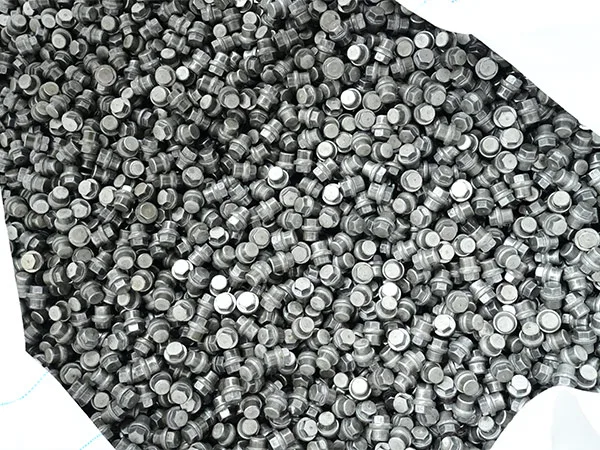
Material selection is one of the first decisions that determines whether a cold-headed component will be easy to manufacture, difficult to form or unsuitable for the intended production route.
For cold heading steel parts, engineers commonly consider carbon steel, alloy steel and stainless steel. In applications where lower weight, electrical conductivity or other special properties matter, aluminum and copper alloys may also become practical alternatives.
The correct choice cannot be made from strength alone.
Cold heading requires the material to undergo significant plastic deformation, so engineers also need to consider ductility, starting hardness, work hardening, surface condition, corrosion resistance, heat treatment and the complexity of the finished geometry.
A material that performs very well in service may still create unnecessary tooling difficulty if its forming behavior is not considered before the drawing is released.
The better approach is to evaluate material and geometry together.
What Matters Most When Selecting Cold Heading Material?
Before selecting a material, define the actual requirements of the component.
The most important factors usually include:
- Required strength
- Ductility during forming
- Corrosion resistance
- Component weight
- Electrical or thermal conductivity
- Wear resistance
- Heat-treatment requirements
- Surface finishing
- Production volume
- Geometry and forming severity
No material provides the best result in every category.
The objective is to select the material that provides the required finished-part performance while remaining compatible with a stable production process.
Carbon Steel: A Practical Choice for Many Cold-Headed Parts
Carbon steel is widely used for bolts, shafts, pins, sleeves and other cold-headed components because it offers a useful balance of formability, strength and processing flexibility.
Low-carbon grades generally provide good ductility, which makes them suitable for components requiring substantial material movement.
Typical applications can include:
- General fasteners
- Sleeves
- Pins
- Adjustment components
- Simple shafts
- Mechanical hardware
As carbon content and strength requirements increase, forming becomes more demanding.
The manufacturer may need to consider:
- Starting material hardness
- Spheroidizing condition
- Number of forming stages
- Post-forming heat treatment
- Tooling load
The current ISO 4954-1:2024 covers non-alloy and alloy steels intended for cold heading and cold extruding and provides an important technical reference for materials supplied as wire rod, wire or bar.
When Carbon Steel Makes Sense
Carbon steel is particularly attractive when the application requires:
- Good cold-forming behavior
- Reliable mechanical strength
- Heat-treatment flexibility
- High-volume production
- Conventional surface treatments
However, if corrosion resistance is critical, the component may require an appropriate coating or a different base material.
Alloy Steel: When Higher Mechanical Performance Is Required
Alloy steels can provide greater strength, wear resistance or heat-treatment response than conventional low-carbon steel.
They are frequently considered for components subjected to:
- Higher mechanical loads
- Repeated stress
- Wear
- Automotive applications
- Structural or transmission functions
The trade-off is that higher-strength materials can be more demanding during forming.
A geometry that is straightforward in a ductile low-carbon steel may require additional process development when produced from a stronger alloy steel.
The engineering team may need to adjust:
- Forming sequence
- Lubrication
- Starting hardness
- Tool design
- Heat treatment
This is why material substitution should never be evaluated only on final tensile strength.
The manufacturer must also understand the condition of the material before forming.
Stainless Steel: Corrosion Resistance With Greater Forming Challenges
Stainless steel becomes attractive when corrosion resistance, appearance or environmental durability is important.
Applications may include:
- Water systems
- Outdoor equipment
- Appliances
- Automotive components
- Industrial mechanisms
- Corrosion-sensitive assemblies
However, stainless steel can behave very differently from conventional carbon steel during cold forming.
Some grades work-harden rapidly as deformation increases.
This can lead to:
- Higher forming loads
- Increased tool stress
- Greater galling risk
- More demanding lubrication requirements
- Additional forming stages
The current ISO 4954-2:2024 specifically covers stainless steels intended for cold heading and cold extruding.
Stainless Grade Matters
“Stainless steel” is not one material.
Different grades can provide very different combinations of:
- Corrosion resistance
- Strength
- Magnetism
- Work-hardening behavior
- Ductility
- Heat-treatment response
The grade should therefore be selected around both the service environment and the intended forming process.
For example, Romy’s existing guide comparing steel and aluminum automotive cold heading parts also explains why material selection needs to consider weight, strength, corrosion behavior and manufacturing conditions together.
Aluminum: Useful When Weight Reduction Matters
Aluminum becomes attractive when reducing component mass is an important design objective.
Compared with steel, aluminum has much lower density and can be suitable for applications such as:
- Lightweight mechanical components
- Automotive and EV systems
- Electrical equipment
- Consumer products
- Specialized fasteners
The Aluminum Association maintains the internationally used wrought aluminum alloy designation system and notes that aluminum alloys can achieve different properties through alloy selection, heat treatment and cold working.
This matters because the exact alloy and temper strongly influence cold-forming behavior.
Aluminum Requires Different Tooling Considerations
Aluminum generally requires lower forming forces than high-strength steel, but it introduces different issues.
These can include:
- Surface pickup
- Galling
- Scratching
- Thin-wall deformation
- Local collapse
- Material transfer to tooling
Lubrication and tool-surface condition can therefore become particularly important.
A lightweight part is only useful if its geometry remains stable through production.
Do Not Select Aluminum Only for Weight
Weight reduction should be evaluated together with:
- Required strength
- Thread performance
- Wear
- Temperature
- Corrosion environment
- Mating materials
- Surface treatment
If a component carries high mechanical load in a very small cross-section, changing from steel to aluminum may require a geometry redesign rather than a simple material substitution.
Copper and Copper Alloys: When Conductivity Becomes Important
Copper and copper alloys are less common than steel for general-purpose fasteners, but they become valuable when the component requires properties such as:
- Electrical conductivity
- Thermal conductivity
- Corrosion resistance
- Specialized mechanical behavior
Potential applications include electrical and electromechanical components where the cold-headed part performs both a mechanical and conductive function.
The Copper Development Association explains that cold working can significantly increase the strength of copper and copper alloys and that material temper directly affects mechanical behavior.
This is particularly important for cold heading.
Temper Is Critical
A copper alloy supplied in a harder condition may provide useful final mechanical properties but less available ductility for severe forming.
A softer starting condition may be easier to cold form but require additional processing to reach the desired final performance.
Engineers should therefore specify:
- Exact alloy
- Starting temper
- Conductivity requirement
- Strength requirement
- Surface condition
- Final application
Simply specifying “copper” provides too little information for a reliable manufacturing plan.
Carbon Steel vs Stainless Steel vs Aluminum vs Copper
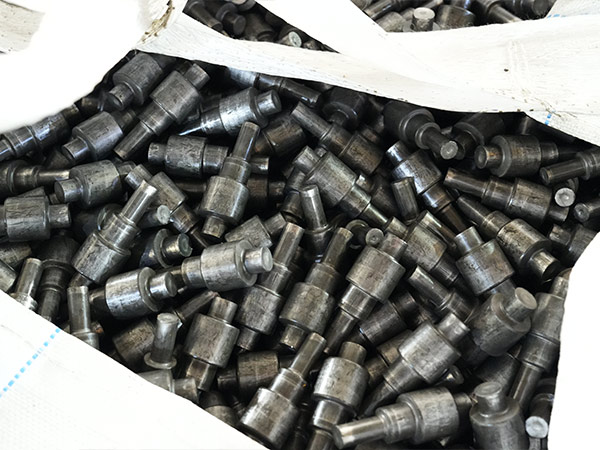
A simple comparison helps clarify the main differences.
| Material | Cold Formability | Strength Potential | Corrosion Resistance | Weight | Special Advantage |
|---|---|---|---|---|---|
| Carbon steel | Generally good | Medium to high | Usually needs protection | High | Versatile and widely applicable |
| Alloy steel | Moderate | High | Depends on finish | High | High mechanical performance |
| Stainless steel | Grade-dependent | Medium to high | High | High | Corrosion resistance |
| Aluminum | Generally good with correct alloy | Low to medium/high by alloy | Good in many environments | Low | Lightweight |
| Copper alloy | Alloy/temper dependent | Varies | Generally good | High | Electrical/thermal conductivity |
This table should be used as an initial screening tool rather than a final material specification.
Exact performance depends on the particular grade, temper, geometry and processing route.
How Geometry Changes the Material Decision
One of the biggest mistakes in material selection is evaluating the material separately from the part geometry.
Consider two components made from the same alloy.
Part A
A relatively simple bolt with moderate head enlargement.
Part B
A complex component containing:
- Large flange
- Deep recess
- Multiple diameter transitions
- Thin wall
- Internal extrusion
Part B places much greater demands on material ductility.
This means the material that works successfully for Part A may require:
- More forming stations
- Different heat treatment
- Improved lubrication
- Geometry modification
when used for Part B.
Romy’s cold heading DFM design guide explains how material choice needs to be considered together with extrusion, cavities, radii and forming severity.
Material Selection Also Affects Tool Life
Material does not only influence the component.
It also influences the tooling used to create it.
Harder or strongly work-hardening materials can increase:
- Punch load
- Die stress
- Surface wear
- Tool temperature
- Risk of galling
This may affect the expected service life of:
- Punches
- Dies
- Inserts
- Extrusion tools
A material that looks attractive on the finished drawing can therefore change the economics of the entire manufacturing process.
Tool design should be reviewed at the same time as material selection, particularly for complex geometry or high-volume programs.
Consider Heat Treatment Before Choosing the Final Grade
Some cold-headed components obtain much of their final mechanical performance after forming.
A typical route might be:
Cold Heading → Thread Rolling → Heat Treatment → Surface Treatment → Inspection
This allows a relatively formable starting condition to be used during cold heading, followed by heat treatment to achieve the required final properties.
However, heat treatment can also affect:
- Straightness
- Dimensions
- Surface condition
- Residual stress
Precision features may need to be inspected or finished after heat treatment.
The manufacturer therefore needs to know the final mechanical requirement before deciding the complete production route.
Surface Treatment Should Not Be an Afterthought
Material and surface finish should also be evaluated together.
Carbon and alloy steels may use coatings to improve corrosion resistance.
Stainless steel may require passivation or other finishing depending on the application.
Aluminum may require anodizing or another surface treatment.
Copper alloys may use plating or protective finishes depending on electrical and environmental requirements.
Surface treatment can influence:
- Final dimensions
- Thread fit
- Corrosion performance
- Appearance
- Friction
For precision cold-headed components, the drawing should specify whether critical dimensions apply before or after the final finish.
Five Questions to Ask Before Selecting Material
1. What Property Is Actually Driving the Choice?
Is the main requirement:
- Strength?
- Corrosion resistance?
- Low weight?
- Conductivity?
- Wear resistance?
Do not select a material simply because it was used in an earlier design.
2. How Severe Is the Cold-Heading Geometry?
Large flanges, deep cavities and major diameter changes require more ductility than simple geometry.
3. Can Final Strength Be Achieved After Forming?
If heat treatment can provide the required final performance, the starting material may be selected partly for better formability.
4. What Environment Will the Part Experience?
Consider:
- Water
- Humidity
- Salt
- Chemicals
- Temperature
- Electrical contact
5. What Is the Expected Production Volume?
A difficult material may still be practical when tooling and process development are justified by long-term high-volume production.
For short runs, a different manufacturing route may make more sense.
What Information Should Be Included in an RFQ?
When requesting custom cold-headed parts, specify more than the material name.
Include where possible:
- Material grade
- Material standard
- Required hardness
- Required mechanical properties
- Heat treatment
- Surface treatment
- Corrosion requirements
- Critical dimensions
- Annual volume
- Application information
If the material is not fixed, explain what the finished component must achieve.
A manufacturer may be able to recommend more than one suitable option.
Romy’s Custom Cold Heading Solutions support drawing-based components in carbon steel, stainless steel, aluminum, copper and other application-specific materials.
Conclusion
There is no single best material for every cold-headed component.
Carbon steel provides a versatile balance of formability and mechanical performance.
Alloy steel can support higher-load applications but may require more careful forming and heat treatment.
Stainless steel provides corrosion resistance while introducing different work-hardening and tooling considerations.
Aluminum offers significant weight reduction but requires attention to alloy, temper and surface behavior.
Copper alloys become valuable when electrical or thermal performance is part of the component’s function.
The correct material should therefore be selected by considering three things together:
Application performance + Cold-heading formability + Complete manufacturing route
Choosing the material this way reduces the risk of discovering after tooling that the selected grade is unnecessarily difficult to form or cannot provide stable mass production.
Frequently Asked Questions
What steel is commonly used for cold heading parts?
The answer depends on required strength, geometry and heat treatment. Low-carbon steels are often attractive because of their ductility, while medium-carbon and alloy steels may be selected where higher final mechanical performance is required.
Is stainless steel suitable for cold heading?
Yes. Many stainless grades can be cold headed, but work-hardening behavior, lubrication, tooling load and forming severity need to be considered. The exact stainless grade and starting condition are important.
Can aluminum parts be cold headed?
Yes. Suitable aluminum alloys can be cold formed and may be attractive when weight reduction is important. Alloy, temper, surface condition and geometry should be reviewed before tooling.
Can copper be used for cold headed parts?
Yes. Copper and copper alloys may be used when conductivity, corrosion resistance or other specialized properties are required. The exact alloy and material temper strongly affect forming behavior.
Does harder material always produce a better cold headed part?
No. Higher starting hardness can make severe cold forming more difficult. In many applications, the component is formed in a suitable starting condition and receives additional heat treatment afterward to achieve its final mechanical properties.
Need Help Selecting Material for a Cold-Headed Part?
If you are deciding between carbon steel, stainless steel, aluminum, copper or another alloy, material selection should be reviewed together with geometry, tolerances and expected production volume.
Send your drawing and material requirements to Romy for a cold-heading material and manufacturability review.